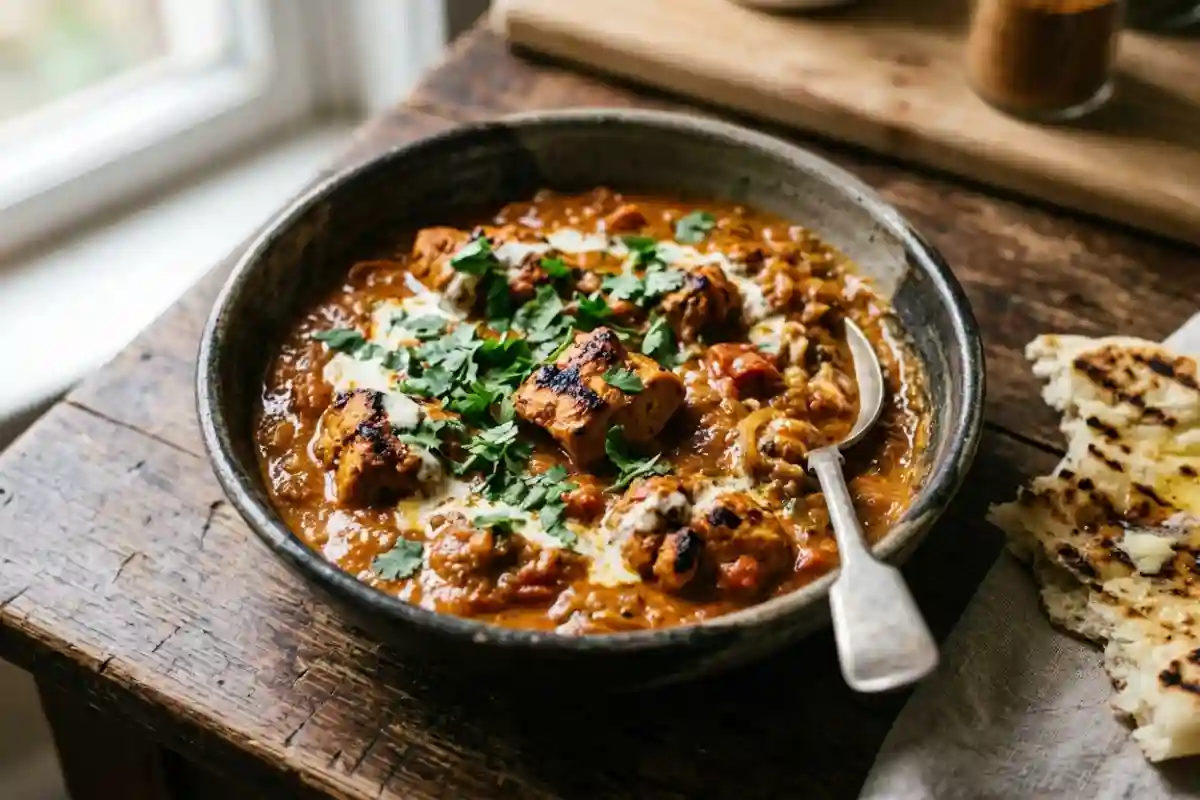
Marinate the Chicken: Combine the yogurt, lemon juice, kashmiri chili powder, cumin, coriander, 1 teaspoon of the garam masala, and 1 teaspoon of the salt in a large bowl and whisk until smooth. Add the chicken pieces and turn them thoroughly to coat. Cover and refrigerate for a minimum of 2 hours, or up to 12 hours. Longer marination pushes the lactic acid deeper into the meat, which is what gives the finished chicken that tender, almost custardy texture once it hits the broiler.
Broil the Chicken: Set the oven broiler to high (approximately 260°C / 500°F) and position the rack 15cm (6 inches) from the element. Arrange the marinated chicken in a single layer on a wire rack set over a foil-lined baking sheet, shaking off the excess marinade. Broil for 12 minutes, flipping the pieces once at the 7-minute mark. The chicken should be deeply spotted with char, fragrant, and register 74°C / 165°F on an instant-read thermometer at the thickest point. Set aside while you build the sauce.
Saute the Aromatics: Heat the oil in a large heavy-bottomed skillet or Dutch oven over medium heat until shimmering. Add the onion and cook, stirring occasionally, for 10 minutes at 160°C / 320°F surface temperature until the onion is soft and translucent with golden edges. Add the garlic and ginger together and cook for 2 minutes more, stirring constantly so nothing burns. The mixture should smell sharp and caramelized, and the raw edge of the garlic should be completely gone.
Bloom the Spices: Push the onion mixture to the edges of the pan and add the tomato paste to the center. Let it cook undisturbed against the hot pan for 90 seconds until it darkens from bright red to a deep brick color. Stir in the turmeric and the remaining 0.5 teaspoon of garam masala and cook for 30 seconds more. Blooming spices in fat before adding liquid releases fat-soluble flavor compounds that would otherwise stay locked in the powder.
Build the Masala Sauce: Pour in the crushed tomatoes and stir everything together, scraping up any fond from the bottom of the pan. Bring the sauce to a simmer over medium-high heat, then reduce to low and cook uncovered for 15 minutes at a gentle 90°C / 195°F until the tomatoes lose their raw brightness and the sauce thickens noticeably. If you prefer a smoother sauce, use an immersion blender directly in the pan at this point, or transfer in batches to a countertop blender and puree until silky.
Finish with Cream and Chicken: Stir the heavy cream, sugar, butter, and remaining 0.5 teaspoon of salt into the sauce and return to a gentle simmer over low heat. Add the broiled chicken pieces and any resting juices from the baking sheet. Simmer together for 8 minutes at 85°C / 185°F, just below a rolling boil, until the sauce clings to each piece and the surface ripples rather than bubbles. Taste and adjust salt before serving.
Plate and Serve: Ladle the chicken tikka masala into shallow bowls over basmati rice or alongside warm naan. Scatter fresh cilantro leaves over the top just before serving. The dish holds its heat well and the flavors continue to develop if left to rest for 5 minutes off the heat before plating.