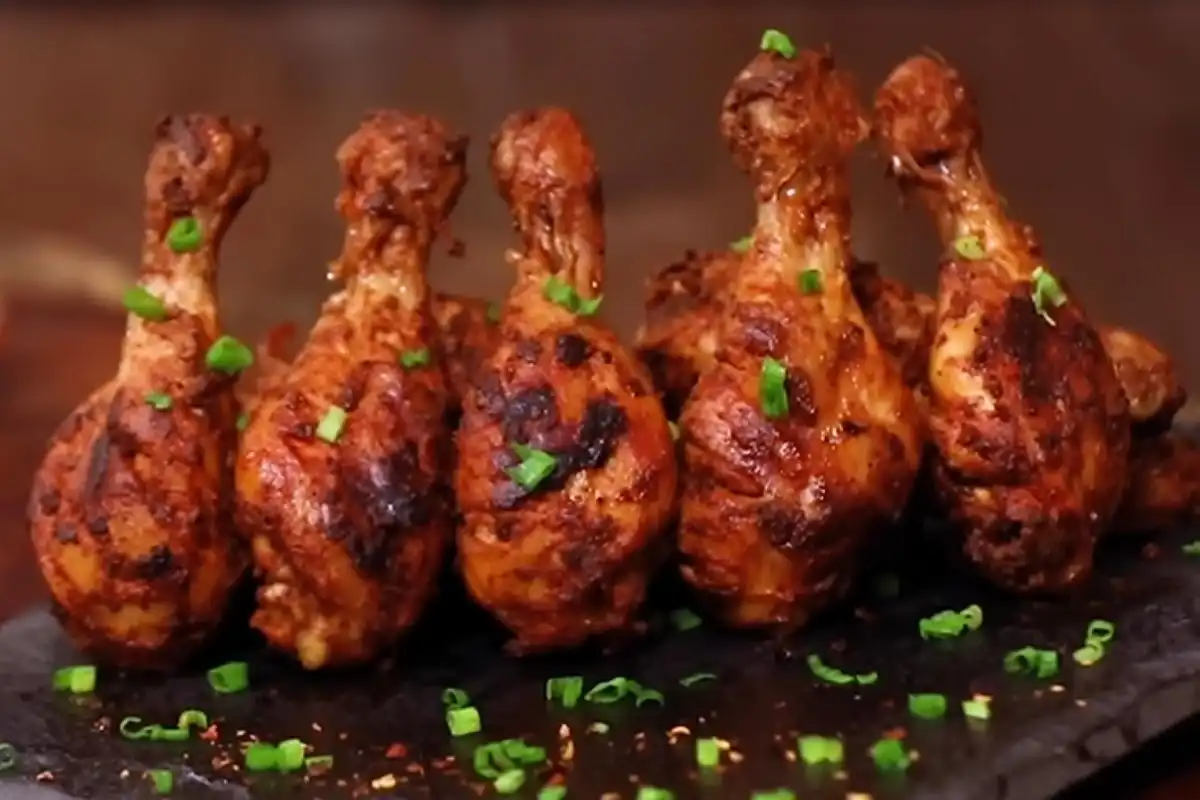

Few dishes have traveled as far and meant as many things to as many people as chicken tikka masala. The tandoor-charred chicken pieces are a direct descendant of Punjabi tikka tradition, while the tomato-cream masala sauce reflects the British-Indian curry house canon that transformed South Asian cooking into a global phenomenon. Whether its true origin sits in Glasgow or Delhi is a debate that food historians still enjoy, but the dish itself is not in question: marinated chicken, broiled or grilled until lightly charred, then simmered in a spiced, creamy tomato gravy until every component becomes something richer than its parts.
A single serving delivers roughly 38 grams of protein from bone-free chicken thighs, while the sauce built from whole-milk yogurt, canned crushed tomatoes, and heavy cream keeps saturated fat moderate when portioned carefully. Garam masala, cumin, coriander, and kashmiri chili powder form the spice base, and they connect this recipe directly to butter chicken, which uses a similar masala framework but skips the char on the chicken.
Chicken tikka masala works on a weeknight without much effort, and it holds beautifully for meal prep, improving overnight as the sauce absorbs the smokiness from the chicken.
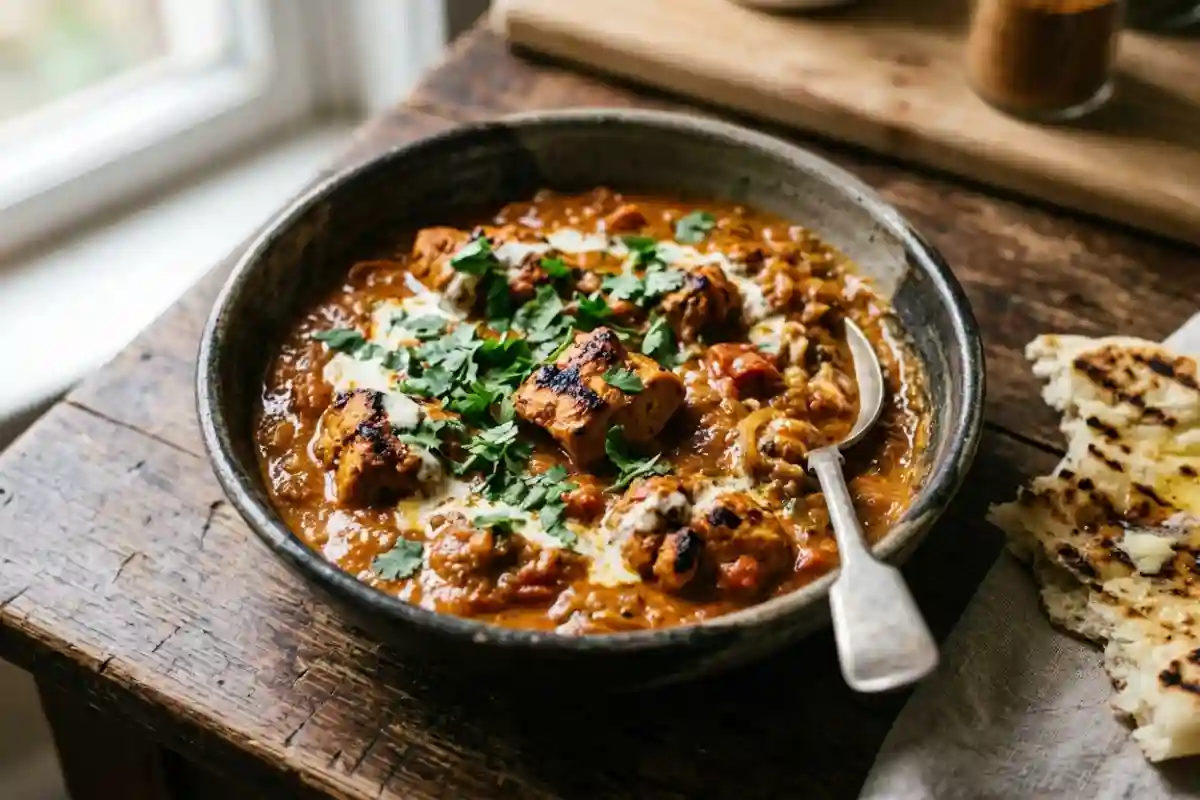
Chicken Tikka Masala
Ingredients
Equipment
Method
- Marinate the Chicken: Combine the yogurt, lemon juice, kashmiri chili powder, cumin, coriander, 1 teaspoon of the garam masala, and 1 teaspoon of the salt in a large bowl and whisk until smooth. Add the chicken pieces and turn them thoroughly to coat. Cover and refrigerate for a minimum of 2 hours, or up to 12 hours. Longer marination pushes the lactic acid deeper into the meat, which is what gives the finished chicken that tender, almost custardy texture once it hits the broiler.
- Broil the Chicken: Set the oven broiler to high (approximately 260°C / 500°F) and position the rack 15cm (6 inches) from the element. Arrange the marinated chicken in a single layer on a wire rack set over a foil-lined baking sheet, shaking off the excess marinade. Broil for 12 minutes, flipping the pieces once at the 7-minute mark. The chicken should be deeply spotted with char, fragrant, and register 74°C / 165°F on an instant-read thermometer at the thickest point. Set aside while you build the sauce.
- Saute the Aromatics: Heat the oil in a large heavy-bottomed skillet or Dutch oven over medium heat until shimmering. Add the onion and cook, stirring occasionally, for 10 minutes at 160°C / 320°F surface temperature until the onion is soft and translucent with golden edges. Add the garlic and ginger together and cook for 2 minutes more, stirring constantly so nothing burns. The mixture should smell sharp and caramelized, and the raw edge of the garlic should be completely gone.
- Bloom the Spices: Push the onion mixture to the edges of the pan and add the tomato paste to the center. Let it cook undisturbed against the hot pan for 90 seconds until it darkens from bright red to a deep brick color. Stir in the turmeric and the remaining 0.5 teaspoon of garam masala and cook for 30 seconds more. Blooming spices in fat before adding liquid releases fat-soluble flavor compounds that would otherwise stay locked in the powder.
- Build the Masala Sauce: Pour in the crushed tomatoes and stir everything together, scraping up any fond from the bottom of the pan. Bring the sauce to a simmer over medium-high heat, then reduce to low and cook uncovered for 15 minutes at a gentle 90°C / 195°F until the tomatoes lose their raw brightness and the sauce thickens noticeably. If you prefer a smoother sauce, use an immersion blender directly in the pan at this point, or transfer in batches to a countertop blender and puree until silky.
- Finish with Cream and Chicken: Stir the heavy cream, sugar, butter, and remaining 0.5 teaspoon of salt into the sauce and return to a gentle simmer over low heat. Add the broiled chicken pieces and any resting juices from the baking sheet. Simmer together for 8 minutes at 85°C / 185°F, just below a rolling boil, until the sauce clings to each piece and the surface ripples rather than bubbles. Taste and adjust salt before serving.
- Plate and Serve: Ladle the chicken tikka masala into shallow bowls over basmati rice or alongside warm naan. Scatter fresh cilantro leaves over the top just before serving. The dish holds its heat well and the flavors continue to develop if left to rest for 5 minutes off the heat before plating.
Notes
- Storage: Transfer cooled chicken tikka masala to an airtight glass or BPA-free plastic container and refrigerate for up to 4 days. The sauce deepens in flavor by day two as the spices continue to meld with the cream and tomato base.
- Reheating: Warm refrigerated portions in a small saucepan over medium-low heat at 80°C / 175°F for 6 to 8 minutes, stirring occasionally and adding a splash of water if the sauce has thickened too much. Confirm the internal temperature of the chicken reaches 74°C / 165°F before serving. Microwaving works in a pinch at 70% power for 2 minutes, covered with a damp paper towel.
- Freezing: Chicken tikka masala freezes well for up to 3 months in a sealed freezer-safe container. Cream-based sauces can separate slightly on thawing, so reheat slowly over low heat and stir continuously to bring the emulsion back together. Thaw overnight in the refrigerator rather than at room temperature.
- Substitution: Boneless chicken thighs are strongly preferred over chicken breasts here because their higher fat content resists the drying effect of the broiler. If you must use breasts, reduce the broiling time to 9 minutes and confirm doneness with a thermometer rather than going by time alone. Coconut cream can replace the heavy cream for a dairy-reduced version, though the sauce will be slightly thinner and carry a mild sweetness.
FAQ
What is the difference between chicken tikka masala and butter chicken?
Both dishes share a tomato-cream masala sauce and use marinated chicken as the protein, but they differ in two meaningful ways. Chicken tikka masala starts with chicken that is grilled or broiled until charred, giving the finished dish a subtle smokiness that runs through the sauce after simmering. Butter chicken, by contrast, traditionally uses chicken that is cooked in a tandoor or roasted without significant char, and the sauce leans sweeter and more buttery due to a higher ratio of butter and often a cashew or cream base. The spice profiles are similar, both relying on garam masala, coriander, and cumin, but chicken tikka masala typically uses more kashmiri chili powder and produces a bolder, slightly more complex result.
Can I make chicken tikka masala without a broiler?
Yes, and the most effective alternative is a very hot cast iron skillet or grill pan. Heat the pan over high heat until it begins to smoke, then sear the marinated chicken pieces in a single layer for 4 minutes per side at around 230°C / 445°F. You will not achieve identical char lines, but the Maillard reaction on the meat surface produces a similar depth of flavor in the finished sauce. An outdoor grill at medium-high heat also works well, cooking the skewered or loose chicken pieces for about 10 minutes total and rotating once halfway through. The key goal in either method is visible caramelization on the exterior before the chicken goes into the sauce.
Why does my tikka masala sauce taste acidic and thin?
Both problems usually trace back to insufficient cooking time for the crushed tomatoes. Raw tomatoes carry a sharpness that requires sustained heat to break down, and 15 minutes of simmering at a gentle 90°C / 195°F is the minimum to mellow that acidity. If the sauce still tastes sharp after that time, the sugar added in step 6 helps balance it, but adding more than 1 teaspoon can make the dish taste sweet rather than rounded. A thinness problem is typically caused by skipping the tomato paste bloom, which contributes body and concentrated flavor, or by adding cream too early before the tomato base reduces. If the sauce remains thin after adding the chicken, simmer uncovered for 5 additional minutes before serving.
Is chicken tikka masala gluten-free?
The core recipe as written contains no gluten, since the marinade uses yogurt and spices and the sauce is built from tomatoes, cream, and aromatics without any flour-based thickener. The main risk of cross-contamination comes from spice blends, particularly commercial garam masala, which some manufacturers process on shared equipment with gluten-containing products. Checking the label of any pre-mixed spice blend for a certified gluten-free mark removes that risk. Serving the dish over basmati rice rather than with commercial naan keeps the entire meal gluten-free, since most store-bought naan contains wheat flour.
How long should I marinate the chicken, and does it make a real difference?
Two hours is the functional minimum, and the difference between a 2-hour and a 12-hour marination is noticeable in both texture and color. The yogurt in the marinade contains lactic acid, which partially denatures the surface proteins on the chicken and allows the spices to penetrate the outer layer rather than sitting on top of it. After 12 hours, the chicken takes on a deeper orange hue from the kashmiri chili and produces a more uniform flavor from the outside in. Beyond 24 hours, the lactic acid begins to break down the texture excessively, making the exterior mushy, so marinating overnight in the refrigerator is the practical sweet spot for best results.
Can I use chicken breasts instead of thighs in this recipe?
Chicken breasts can work, but they require a shorter broiling time and closer attention to temperature to avoid drying out. Thighs contain more intramuscular fat, which protects them under the high heat of a broiler and keeps the meat moist even after 8 additional minutes of simmering in the sauce. Breasts have a leaner profile and will turn stringy if they reach much above 74°C / 165°F during either the broiling or the simmering stage. If you use breasts, cut them into slightly larger 6cm (2.5-inch) pieces to reduce surface area exposed to heat, broil for 9 minutes rather than 12, and add them to the finished sauce for only 5 minutes rather than 8.