Ingredients
Equipment
Method
- Season the Chicken: Pat the chicken thighs and drumsticks completely dry with paper towels, then season both sides with 0.75 teaspoon of the sea salt and 0.25 teaspoon of the black pepper. Drying the surface removes excess moisture, which is critical for achieving a proper sear rather than steaming the meat in the pan. Set the seasoned pieces aside on a plate while you heat the pot.
- Sear the Chicken: Heat 2 tablespoons of oil in a 6-quart Dutch oven over medium-high heat until the oil shimmers and a drop of water flicked in sizzles immediately, about 2 minutes. Arrange the chicken pieces skin-side down in a single layer and sear without moving them for 6 minutes, until the skin is deep golden brown and releases cleanly from the pot. Flip and sear the second side for 4 minutes. Transfer the seared pieces to a clean plate; the rendered fond left in the bottom of the pot is the flavor foundation for the entire stew.
- Saute the Aromatics: Reduce the heat to medium and add the diced onion, carrots, and celery to the same pot, scraping up any browned bits from the bottom as the vegetables release their moisture. Cook the aromatics, stirring occasionally, for 6 minutes until the onion is translucent and beginning to soften at the edges. Add the minced garlic and cook for 1 additional minute, stirring constantly, until fragrant and pale gold. This layered building of aromatics creates the savory base the broth will absorb during the long simmer.
- Build the Broth Base: Push the vegetables to the sides of the pot and add the tomato paste to the cleared center. Cook the tomato paste, pressing it against the hot surface for 2 minutes, until it darkens slightly from bright red to a deep brick color and smells faintly caramelized. Stir in the thyme, rosemary, and bay leaf, coating the vegetables evenly. Pour in the chicken broth and stir well, scraping any remaining fond from the bottom of the pot to incorporate it fully into the liquid.
- Return the Chicken and Add Potatoes: Nestle the seared chicken pieces back into the pot skin-side up, along with any accumulated juices from the resting plate. Add the halved baby Yukon Gold potatoes, pressing them gently into the liquid so they are at least partially submerged. Season the broth with the remaining 0.25 teaspoon of salt and 0.25 teaspoon of black pepper. The chicken should be partially above the broth surface so the skin remains exposed to steam rather than becoming waterlogged.
- Simmer the Stew: Bring the pot to a gentle boil over medium-high heat, then reduce the heat to low so the liquid maintains a slow, steady simmer with occasional small bubbles breaking the surface. Cover the pot with a lid left slightly ajar and cook for 45 minutes, until the chicken is fully cooked through and registers 74°C / 165°F on an instant-read thermometer inserted at the thickest part away from the bone. The potatoes should be completely tender when pierced with a fork, and the broth should have reduced slightly and taken on a rich amber color from the fond and tomato paste.
- Thicken the Broth: Transfer the chicken pieces to a plate and remove the bay leaf from the broth. In a small bowl, whisk together 2 tablespoons of cornstarch and 3 tablespoons of cold water until completely smooth with no lumps. Return the pot to medium heat and bring the broth to a gentle simmer, then pour in the cornstarch slurry while stirring continuously. Cook for 3 minutes, stirring, until the broth thickens enough to coat the back of a spoon lightly. The stew should look silky and cohesive, not watery or pasty.
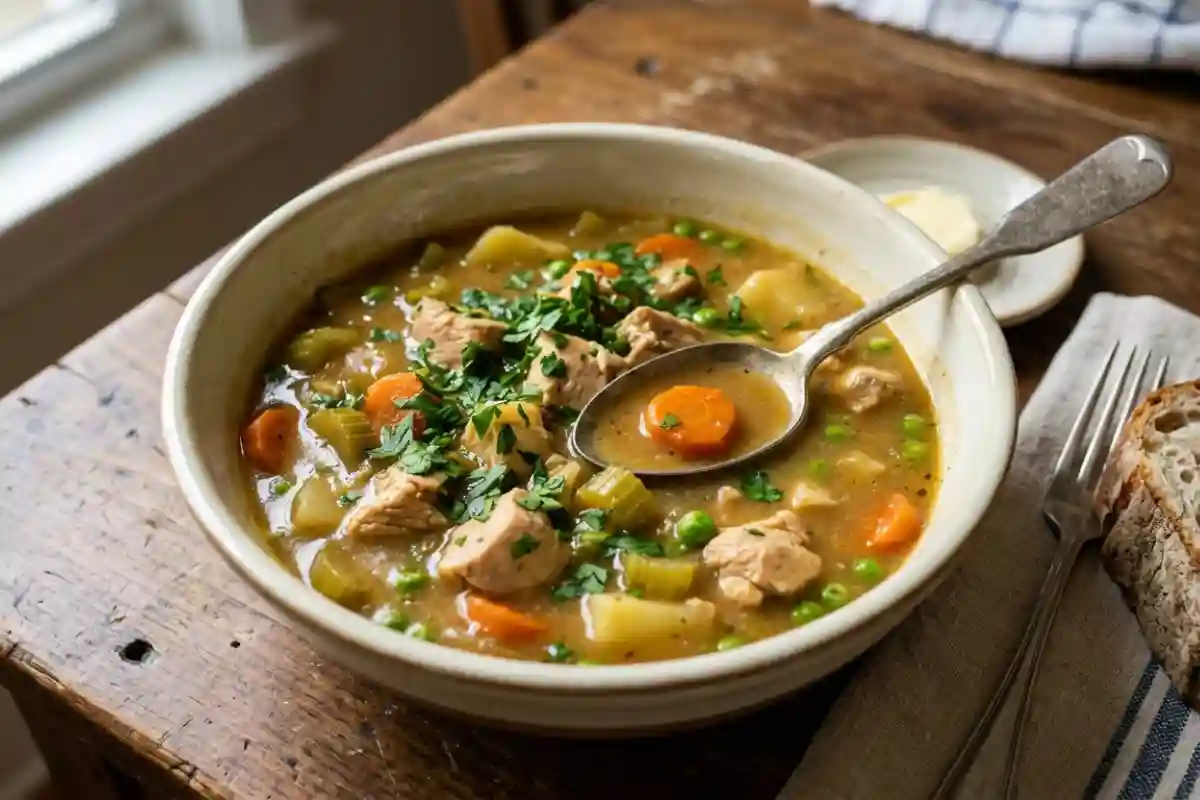
- Finish with Peas and Serve: Return the chicken pieces to the thickened stew and stir in the thawed peas. Cook over medium-low heat for 2 minutes until the peas are heated through and bright green. Taste the broth and adjust the seasoning with additional salt if needed. Ladle the stew into wide, shallow bowls, making sure each portion includes a piece of chicken, a generous scoop of vegetables, and ample broth.
Notes
Storage: Transfer cooled stew to an airtight container and refrigerate for up to 4 days. The broth will thicken further when chilled due to the collagen released from the bones; it will loosen back to a stew consistency once gently reheated on the stovetop.
Reheating: Pour the desired portion into a small saucepan and reheat over medium-low heat, stirring occasionally, for 8 minutes until the broth is fully liquid again and the chicken reaches an internal temperature of 74°C / 165°F. Add a splash of chicken broth, about 60ml / 0.25 cup, if the stew has thickened too much during refrigeration.
Freezing: Cool the stew completely, then portion it into zip-top freezer bags or rigid airtight containers, leaving 2.5cm / 1in of headspace for expansion. Freeze for up to 3 months. Thaw overnight in the refrigerator before reheating; note that potato texture softens slightly after freezing.
Make-Ahead: The stew tastes noticeably better on day two after the broth has had time to meld overnight. Prepare the full recipe up to 2 days ahead, store it refrigerated in the Dutch oven with the lid on, and reheat gently on the stovetop over medium-low heat for 12 minutes before serving.
Substitution: Boneless skinless chicken breasts can replace the bone-in thighs and drumsticks, but the broth will be thinner and less rich because the bones and collagen are absent. Compensate by adding 1 additional tablespoon of tomato paste and reducing the simmer time to 25 minutes to prevent the breast meat from drying out.
Equipment Note: A heavy-bottomed Dutch oven distributes heat evenly and is essential for preventing hot spots that can scorch the tomato paste and aromatics during the saute steps. A thin-bottomed stockpot will work in a pinch, but requires more frequent stirring and a lower heat setting throughout cooking.