Sear the Chicken: Heat the olive oil in a 7-quart stockpot or Dutch oven over medium-high heat until the oil shimmers and a faint haze rises from the surface, about 2 minutes. Add the chicken pieces skin-side down in a single layer, working in batches if needed to avoid crowding the pot. Sear undisturbed for 4 minutes until the skin turns a deep golden brown and releases naturally from the surface. Flip and sear the second side for 2 minutes, then transfer the chicken to a plate. This step builds a fond on the bottom of the pot, which will dissolve into the broth and deepen its savory character.
Sweat the Aromatics: Reduce the heat to medium and add the halved onion cut-side down to the same pot, along with the smashed garlic cloves. Cook without stirring for 3 minutes until the onion faces take on a golden-brown color and the garlic softens and becomes fragrant. Add the celery, parsley stems, bay leaves, thyme sprigs, and black peppercorns, then stir to coat everything in the residual fat. Cooking the aromatics in the same pot lifts the browned fond from the sear and begins layering the flavor base before any liquid is added.
Build the Broth: Return the seared chicken to the pot, nestling the pieces among the aromatics. Pour in the 2.2 liters of cold water, which should just cover the chicken by about 2cm / 0.75in. Stir in 1.5 teaspoons of fine sea salt and bring the liquid to a full boil over high heat, about 10 minutes. As the broth heats, use a large slotted spoon to skim off any gray foam that rises to the surface, which contains proteins and impurities that would cloud the finished broth.
Simmer the Soup: Once the broth reaches a boil and has been skimmed clean, reduce the heat to low so the liquid maintains a gentle, steady simmer with small bubbles breaking the surface. Partially cover the pot with a lid and cook for 60 minutes, adjusting the heat occasionally to keep the simmer consistent and prevent a rolling boil, which would make the broth cloudy. After 60 minutes, the chicken should be fully cooked and very tender; confirm by checking that the thickest piece reads at least 74°C / 165°F on an instant-read thermometer. A slow simmer rather than a hard boil is what keeps the broth clear, golden, and full-bodied.
Pull and Shred the Chicken: Use a slotted spoon or tongs to lift the chicken pieces out of the broth and transfer them to a cutting board. Allow the chicken to cool for 10 minutes until comfortable to handle. Pull the meat from the bones using two forks, discarding the skin, bones, and any cartilage. Shred the meat into bite-sized pieces, about 3cm / 1.2in lengths, and set aside.
Strain and Return the Broth: Set a fine-mesh strainer over a large heatproof bowl or secondary pot and carefully pour the broth through it to remove the spent aromatics, herb stems, peppercorns, and onion. Discard the solids. Pour the strained, clear broth back into the original pot and return it to medium heat. Taste the broth at this stage and adjust the salt level before adding the vegetables.
Cook the Vegetables: Add the sliced carrots and potato cubes to the strained broth and bring the liquid back to a simmer over medium heat, about 4 minutes. Cook for 15 minutes, then add the sliced celery. Continue simmering for another 5 minutes until the carrots are fully tender and yield easily when pierced with a fork, the potatoes hold their shape but are cooked through, and the celery has softened while retaining a slight bite. The total vegetable cook time is 20 minutes at a steady simmer of approximately 95°C / 203°F.
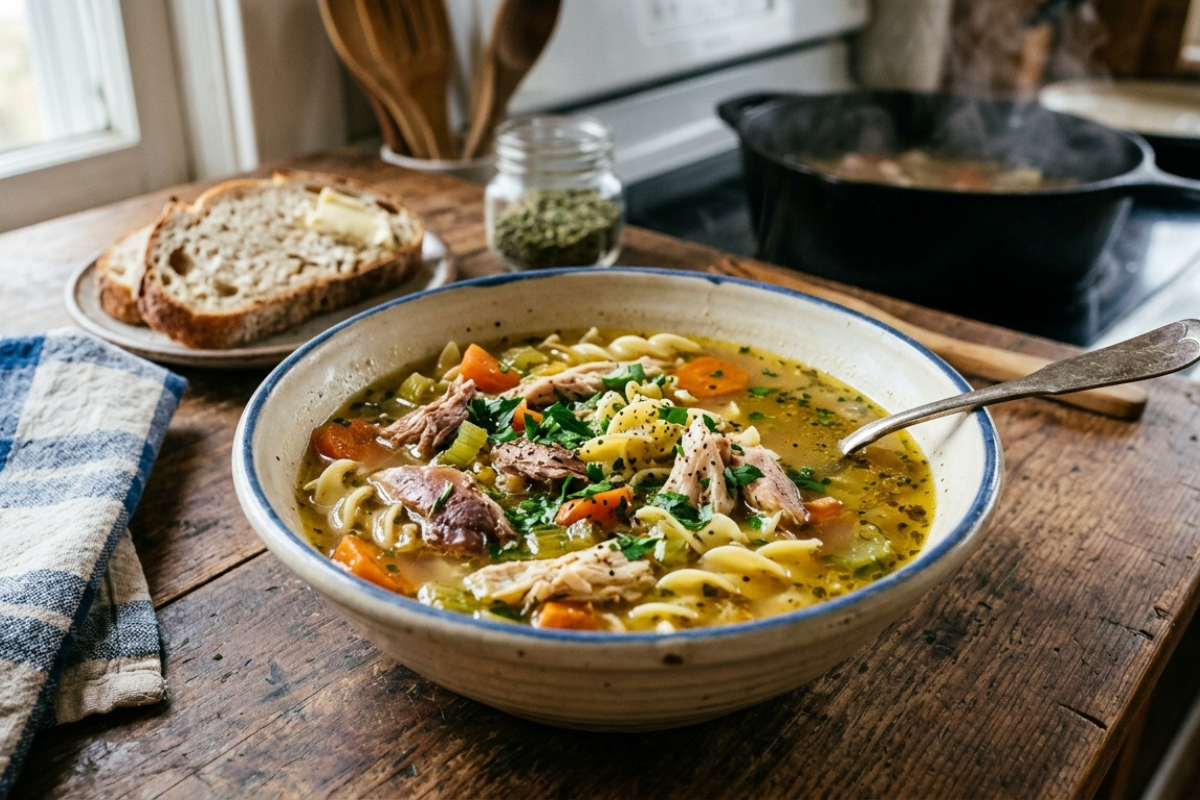
Finish and Serve: Return the shredded chicken to the pot and stir to distribute it evenly through the broth. Simmer for 3 minutes to heat the chicken through completely. Remove the bay leaves if they are still present in the pot, then tear the reserved fresh parsley leaves and scatter them over the surface of the soup. Ladle into deep bowls and serve immediately while the broth is steaming hot.