Pound the Chicken Breasts: Place one chicken breast inside a zip-lock bag or between two sheets of plastic wrap on a cutting board. Strike the thickest part of the breast with the flat side of a meat mallet or a rolling pin, working from the center outward toward the edges, until the breast reaches a uniform 1.2cm / 0.5in thickness. Repeat with the remaining 3 chicken breasts. Even thickness allows every part of the cutlet to cook through in the same amount of time, preventing dry edges and an undercooked center.
Season the Chicken: Combine the kosher salt, black pepper, and garlic powder in a small bowl and stir until evenly mixed. Pat each pounded chicken breast dry with paper towels to remove surface moisture. Sprinkle the seasoning blend evenly over both sides of each breast and press gently so the seasoning adheres. Dry surfaces allow the flour layer to bond more firmly to the chicken, which anchors the breading during frying.
Set Up the Breading Station: Arrange three shallow bowls in a line on the counter. Add the all-purpose flour to the first bowl. Whisk together the 2 beaten eggs and 2 tablespoons of whole milk in the second bowl until fully combined with no streaks of yolk visible. Pour the panko breadcrumbs into the third bowl and spread them into an even layer. A sequential breading station prevents cross-contamination between the dry and wet coatings, which keeps each layer intact on the cutlet.
Bread Each Cutlet: Working with one chicken breast at a time, dredge it in the flour bowl and press firmly to coat both sides and all edges. Shake off any excess flour. Dip the floured breast into the egg wash, letting any excess drip back into the bowl. Transfer immediately to the panko bowl and press down firmly, turning the breast over and pressing again, until the entire surface is covered in a dense layer of panko. Set the breaded cutlet on a clean plate and repeat with the remaining 3 breasts. Pressing the panko firmly into the egg wash ensures the crumbs bond tightly and do not separate from the crust during frying.
Heat the Frying Oil: Pour 240ml / 1 cup of neutral oil into a 12-inch stainless steel skillet or cast iron skillet and set over medium heat. Heat the oil to 175°C / 350°F, which takes approximately 4 minutes, confirmed with an instant-read thermometer or a wooden chopstick inserted into the oil that produces a steady stream of small bubbles.
Fry the First Side: Gently lower one breaded chicken cutlet into the hot oil using tongs, laying it away from you to avoid splatter. Cook for 5 minutes without moving the cutlet until the underside is deep golden brown and the breading releases cleanly from the pan surface. Fry in batches of 1 or 2 cutlets at a time to maintain the oil temperature at 175°C / 350°F throughout cooking.
Fry the Second Side: Flip the cutlet carefully with tongs and cook the second side for 4 minutes until it matches the deep golden color of the first side and an instant-read thermometer inserted into the thickest part of the chicken reads 74°C / 165°F. Transfer the finished cutlet to a wire rack set over a baking sheet. A wire rack allows air to circulate under the crust and prevents steam from softening the bottom coating.
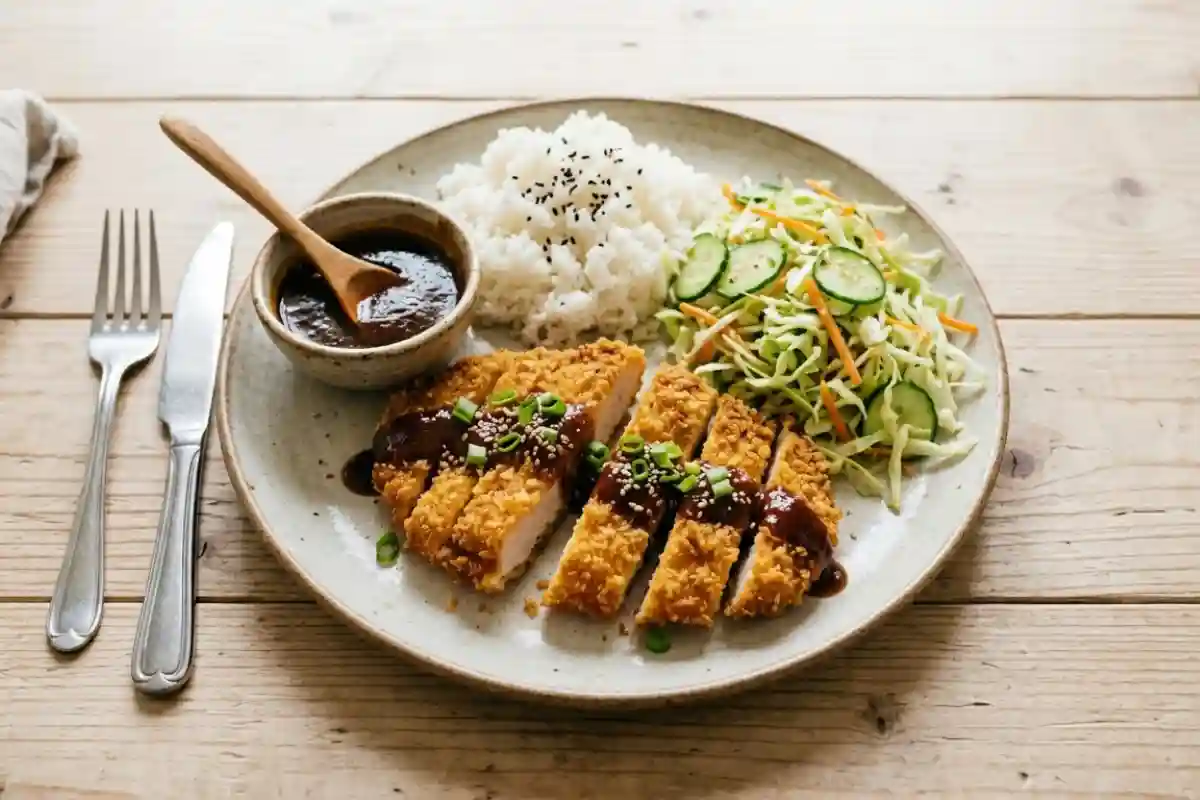
Rest and Slice: Allow the finished chicken katsu to rest on the wire rack for 3 minutes before slicing. Place the cutlet on a cutting board and slice crosswise into strips approximately 2cm / 0.8in wide using a sharp chef's knife. Arrange the sliced katsu over a mound of shredded green cabbage and steamed rice, then drizzle or serve tonkatsu sauce alongside.