Ingredients
Equipment
Method
Prep And Season
- Set the duck breasts skin side up on a cutting board and use paper towels to pat them very dry all over. Dry skin helps it crisp later instead of steaming.
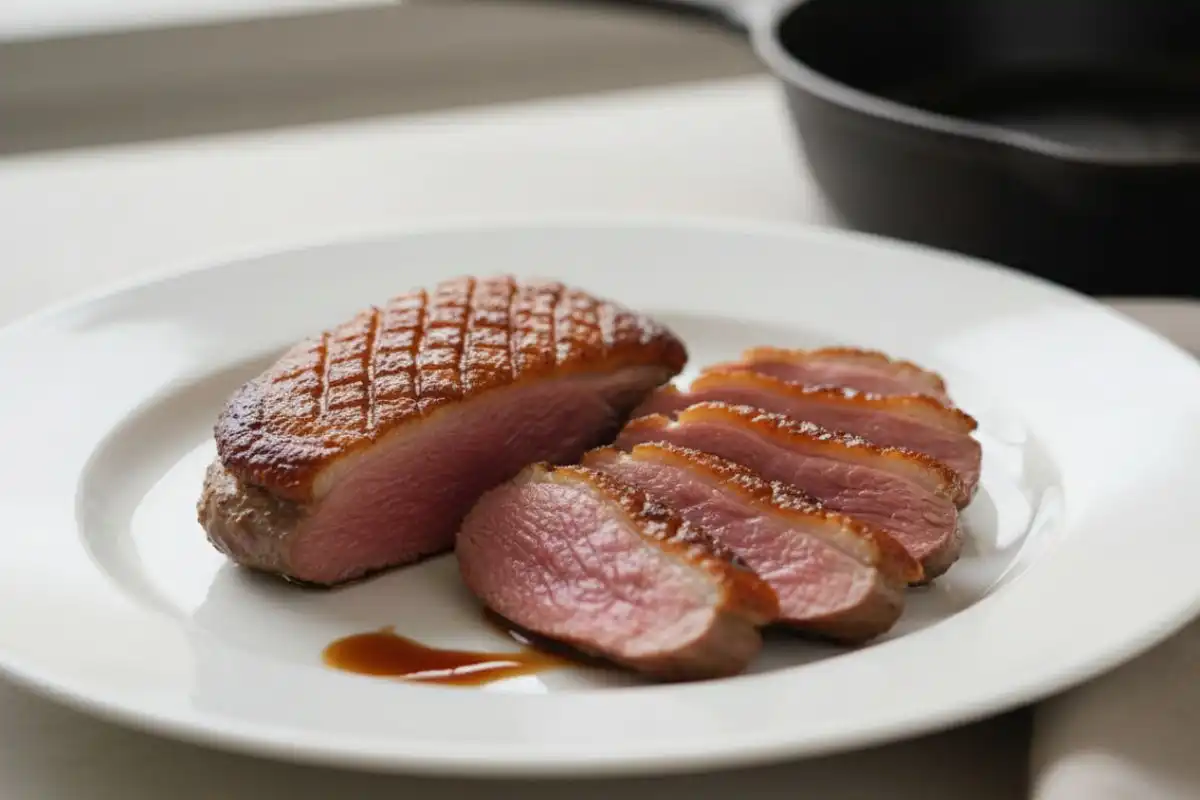
- Using a sharp paring knife on the cutting board, lightly score the skin in a crosshatch pattern about ¼ inch apart, cutting through the fat but not into the meat. This lets the fat render out evenly.
- Mix the kosher salt, black pepper, garlic powder, and dried thyme in a small bowl using a measuring spoon and your fingers. Season both sides of each breast evenly, pressing the spices into the scored skin.
- Place each breast into a vacuum bag or heavy zip-top bag on the counter, skin side up. Arrange them in a single layer so they cook evenly.
Bag And Heat The Bath
- If using a vacuum sealer, seal the bags according to the machine directions on your counter; if using zip bags, use the water displacement method by slowly lowering the open bag into a pot or sous vide container of water while holding the top, then sealing it once the air is pushed out. Keep the duck fully submerged in the bag.
- Clip your sous vide circulator to a large pot or sous vide container, fill it with enough water to cover the bags, and set the temperature to 130°F for a classic medium-rare duck breast. Let the water come up to temperature before adding the duck.
- When the water reaches 130°F, use tongs to lower the sealed duck bags into the bath, making sure they stay fully under the water and not floating. Cook for 2 hours, using the circulator timer or a kitchen timer.
Dry And Preheat
- When time is up, use tongs to lift the bags out of the water and set them on a towel-lined counter. Carefully open each bag and transfer the duck breasts to a cutting board, skin side up, saving any juices in the bag if you want to drizzle them later.
- Use plenty of paper towels on the cutting board to pat the duck skin and meat completely dry. Any moisture left on the surface will fight against getting that crispy crust.
- Set a large skillet on the stove and add the duck fat or oil, but do not turn on the heat yet if you want a cold-pan start for extra rendering. Lay the duck breasts in the skillet skin side down with tongs so they sit flat.
Sear For Crispy Skin
- Turn the burner to medium-high heat under the skillet and let the fat slowly start to sizzle around the duck, using your ears as a cue. As the pan heats, the skin will render and turn golden.
- Cook the duck skin side down for about 5 to 7 minutes, using tongs to gently press the breasts so the skin makes full contact with the skillet surface. Watch for the skin to turn deep golden brown and feel very crisp when tapped with the tongs.
- Flip the duck breasts over with tongs so the meat side faces down and sear for about 30 to 60 seconds just to warm and lightly color the flesh. If you want to double-check, use an instant-read thermometer in the thickest part; it should read around 130°F for medium-rare.
- Transfer the duck breasts to a clean cutting board using tongs and sprinkle a small pinch of kosher salt over the skin while it is still hot. Let them rest for about 10 minutes so the juices settle back into the meat.
- To serve, use a sharp knife on the cutting board to slice each breast crosswise into ½ inch slices, keeping the skin attached. Fan the slices out on plates and spoon any saved bag juices or pan drippings on top if you like
Notes
- For slightly more cooked duck, set the sous vide to 135°F or 140°F; the texture will be firmer but still juicy.
- Save rendered duck fat from the skillet in a jar once cooled; it is killer for roasting potatoes or veggies later.
- Make sure the skin is bone-dry before searing, or it will go soft instead of crisp.