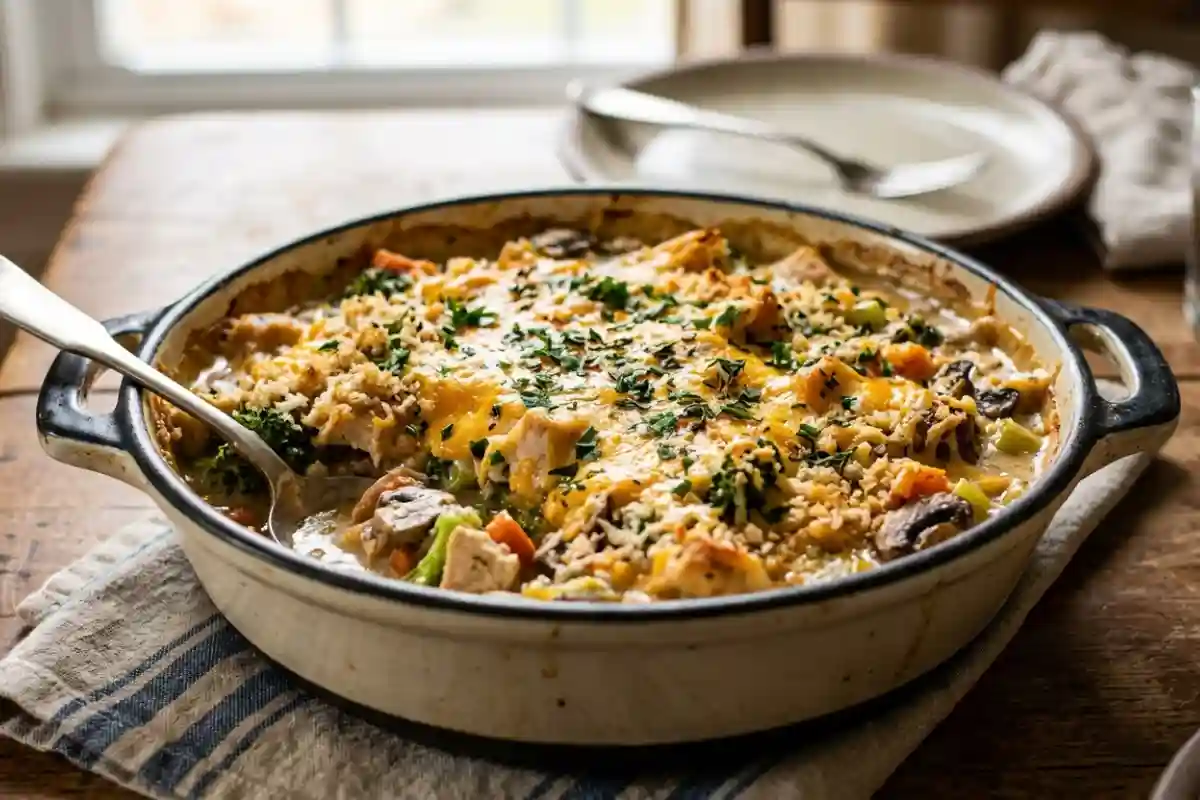
Set the oven to 175°C / 350°F and position a rack in the lower third. Allowing the oven to fully preheat before the casserole goes in ensures even braising from the start rather than a slow, uneven climb to temperature.
Pat the chicken thighs completely dry with paper towels, then season all surfaces evenly with the sea salt and black pepper. Dry skin is not just about texture - moisture on the surface steams rather than sears, and a pale, rubbery skin at this stage cannot be recovered later.
Heat the oil in a Dutch oven or deep oven-safe casserole over medium-high heat on the stovetop until it shimmers. Lay the thighs in skin-side down, working in two batches if necessary to avoid crowding, and cook for 7 minutes without disturbing them. The skin should release cleanly from the pot and show a deep golden-brown color before you flip. Sear the flesh side for 3 minutes, then transfer the thighs to a plate.
Reduce the heat to medium and add the diced onion to the fat remaining in the pot. Cook, stirring occasionally, for 5 minutes until softened and translucent at the edges. Add the garlic and cook for 1 minute more, stirring constantly, until fragrant. The fond on the pot bottom should smell nutty rather than acrid at this point.
Push the onion and garlic to the sides and add the tomato paste directly to the center of the pot. Cook the paste undisturbed for 2 minutes, letting it darken slightly against the hot metal. This step drives off the raw, tinny flavor and adds a layer of umami depth to the braising liquid.
Pour in the white wine and use a wooden spoon to scrape up every bit of fond from the pot bottom. Let it reduce for 2 minutes, then add the chicken stock, thyme, rosemary, and bay leaves. Stir to combine, then nestle in the carrots, celery, and baby potatoes.
Set the seared chicken thighs back into the pot skin-side up, positioning them so the skin sits above the liquid rather than submerged. Cover with the lid and transfer to the preheated oven. Braise at 175°C / 350°F for 45 minutes. At the end of the braise, the vegetables will be fork-tender and the exposed chicken skin will have crisped slightly around its edges.
Probe the thickest part of a thigh with an instant-read thermometer, avoiding the bone. The chicken is safe and fully cooked at an internal temperature of 74°C / 165°F, though thighs are generally best eating somewhere around 85°C / 185°F, where the collagen has fully broken down and the meat pulls easily. If needed, return the pot, uncovered, for an additional 10 minutes.
Remove the bay leaves and let the casserole rest uncovered for 5 minutes before serving. Scatter the fresh parsley over the top at the table rather than in the kitchen so it stays bright and green against the braise.