
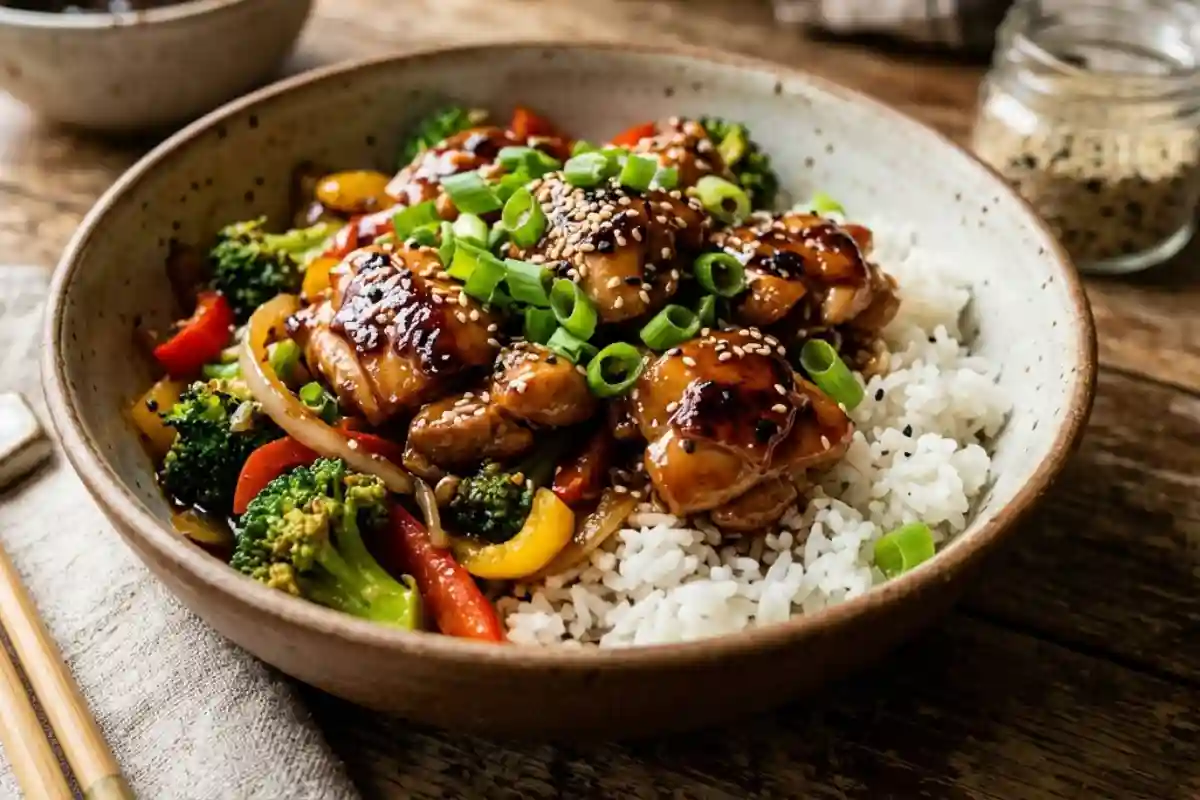
Chicken Teriyaki is a Japanese pan-seared chicken dish coated in a savory-sweet glaze made from soy sauce, mirin, and sake. The cooking method combines a stovetop sear with a glaze reduction applied directly in the pan. Japanese cuisine developed teriyaki as a technique, not just a flavor, where the word itself describes the glossy sheen that high-heat caramelization produces on the protein surface.
One serving of Chicken Teriyaki provides approximately 38 grams of protein and 340 calories. The dish qualifies for high-protein meal plans and can be adapted for halal dietary frameworks by substituting sake with water and using tamari in place of standard soy sauce. Chicken Teriyaki suits weeknight dinners for households of two to six people and works equally well as a meal prep centerpiece for the workweek.
Chicken Teriyaki pairs naturally with chicken fried rice, which absorbs the excess glaze and rounds out the meal as a complete plate. This recipe uses a cornstarch slurry added to the glaze to produce a thicker, lacquer-like coating that clings to each thigh without pooling on the plate.
Chicken Teriyaki Recipe
Ingredients
Equipment
Method
- Trim and Season Chicken: Place the 4 chicken thighs on a cutting board and use a sharp chef's knife to trim any excess fat overhanging the edges, leaving the natural marbling intact for flavor. Pat each thigh completely dry with paper towels, pressing firmly on both sides to remove surface moisture. Season both sides of each thigh with 0.5 teaspoon of kosher salt and 0.25 teaspoon of black pepper. Dry thighs make direct contact with the hot pan surface, which produces a deeper sear and better caramelization when the glaze is applied.
- Mix the Teriyaki Glaze: Combine the 60ml / 0.25 cup of soy sauce, 60ml / 0.25 cup of mirin, 2 tablespoons of sake, 1.5 tablespoons of granulated sugar, 1 teaspoon of freshly grated ginger, and 2 minced garlic cloves in a small mixing bowl. Stir the mixture with a spoon until the sugar fully dissolves. In a separate small bowl, whisk together 1 teaspoon of cornstarch and 1 tablespoon of cold water until no lumps remain. Set both bowls aside within arm's reach of the stove, as the glaze comes together quickly once cooking begins.
- Sear the First Side: Heat 1 tablespoon of avocado oil in a 12-inch stainless steel or cast iron skillet over medium-high heat for 2 minutes until the oil shimmers and a small drop of water flicked into the pan evaporates on contact. Place the seasoned chicken thighs smooth-side down in a single layer and cook for 6 minutes without pressing or moving them until the underside is deep golden brown and lifts cleanly from the pan surface.
- Flip and Cook Through: Flip each chicken thigh using tongs and cook the second side for 5 minutes over medium heat until the thigh feels firm when pressed at the thickest point and an instant-read thermometer inserted into the center of the largest thigh reads 74°C / 165°F. Transfer the cooked thighs to a clean plate and leave all pan drippings in the skillet.
- Build and Reduce the Glaze: Pour the prepared soy sauce mixture into the same skillet with the drippings over medium-high heat. Stir the liquid with a wooden spoon, scraping up any browned bits from the pan floor, and cook for 2 minutes until the mixture bubbles actively across the full surface. Stir the cornstarch slurry once more to recombine it, then pour it into the simmering glaze while stirring continuously. Cook for 1 additional minute until the glaze thickens to a consistency that coats the back of the spoon and leaves a clean line when you draw a finger through it.
- Glaze and Rest the Chicken: Return the seared chicken thighs to the skillet and turn each one to coat all sides in the glaze over medium heat for 1 minute until the surface of each thigh takes on a glossy lacquer-like sheen. Remove the skillet from the heat and let the chicken rest in the pan for 3 minutes so the glaze sets and the juices redistribute evenly before slicing or serving.
Notes
- Storage: Transfer cooled Chicken Teriyaki to an airtight container and refrigerate for up to 4 days. Store the chicken and any remaining glaze together so the thighs do not dry out during storage.
- Reheating: Place refrigerated thighs in a skillet over medium heat with 2 tablespoons of water and cover with a lid. Reheat for 4 minutes, turning once at the 2-minute mark, until the internal temperature returns to 74°C / 165°F and the glaze is warmed through and glossy.
- Make-Ahead: Prepare the teriyaki glaze up to 5 days in advance and store it in a sealed jar in the refrigerator. Trim and dry the chicken thighs up to 24 hours ahead and refrigerate uncovered on a wire rack to keep the surface dry for a better sear.
- Substitution: Boneless, skinless chicken breasts work in place of thighs using the same glaze. Pound each breast to a uniform 1.5cm / 0.6in thickness before seasoning, then sear for 4 minutes per side and verify an internal temperature of 74°C / 165°F. For a halal version, replace sake with water and use tamari instead of standard soy sauce.
- Freezing: Freeze fully cooked and cooled Chicken Teriyaki with the glaze in a freezer-safe airtight container for up to 2 months. Thaw overnight in the refrigerator before reheating. Do not refreeze thawed chicken.
- Glaze Consistency Tip: If the glaze thickens too much during reduction, add 1 tablespoon of warm water and stir over low heat for 30 seconds to loosen it. If the glaze remains too thin after adding the cornstarch slurry, continue cooking for 1 additional minute until it reaches the correct coating consistency.
FAQs
What is Chicken Teriyaki?
Chicken Teriyaki is a Japanese dish where chicken is seared in a hot pan and then coated in a glaze made from soy sauce, mirin, sake, and sugar. The word teriyaki comes from the Japanese terms teri, meaning luster or gloss, and yaki, meaning grill or broil. The cooking method caramelizes the sugars in the glaze to produce the dish’s characteristic shiny coating. Chicken Teriyaki belongs to the broader teriyaki family, which includes beef teriyaki and salmon teriyaki prepared using the same glaze technique.
What is the difference between teriyaki sauce and teriyaki glaze?
Teriyaki sauce refers to the liquid mixture of soy sauce, mirin, sake, and sugar before it is reduced in a pan. Teriyaki glaze is the same mixture after it has been cooked down with heat, which evaporates water, concentrates the flavors, and creates the thick, sticky coating that adheres to the protein. Adding a cornstarch slurry accelerates thickening and produces a more consistent glaze texture without extended cooking time.
What temperature should Chicken Teriyaki reach?
Chicken thighs must reach an internal temperature of 74°C / 165°F at the thickest point to be safe to eat. Use an instant-read thermometer inserted into the center of the largest thigh to verify doneness. Thighs cooked to exactly 74°C / 165°F remain juicy because the higher fat content of the cut resists drying out at that temperature.
Can you make Chicken Teriyaki in an air fryer?
Chicken Teriyaki can be partially prepared in an air fryer, but the glaze must be built separately on the stovetop. Cook seasoned chicken thighs in the air fryer basket at 200°C / 390°F for 18 minutes, flipping once at the 9-minute mark, until the internal temperature reaches 74°C / 165°F. Prepare the glaze in a small saucepan using the same stovetop method, then toss the cooked thighs in the finished glaze before serving.
What do you serve with Chicken Teriyaki?
Chicken Teriyaki pairs well with steamed white rice, which absorbs the glaze and balances the savory sweetness of the dish. Chicken fried rice is another strong pairing that uses similar pantry staples and rounds out the meal as a single complete plate. Steamed or sauteed broccoli, edamame, and thinly sliced cucumber salad also complement the bold glaze without competing with it.
Is Chicken Teriyaki gluten-free?
Standard Chicken Teriyaki is not gluten-free because traditional soy sauce contains wheat as a primary ingredient. Substituting tamari, which is a Japanese soy sauce brewed without wheat, makes the dish gluten-free while preserving the flavor profile of the original glaze. Confirm the tamari label reads certified gluten-free to avoid cross-contamination from shared production facilities.
Why is my teriyaki glaze not sticking to the chicken?
A teriyaki glaze fails to stick when the chicken surface has too much moisture or when the glaze is added to a cold pan. Pat each thigh completely dry with paper towels before searing and ensure the pan is hot enough that the chicken sears rather than steams. The cornstarch slurry in this recipe thickens the glaze to a consistency that coats and clings to the protein surface rather than sliding off.
Can you use chicken breast instead of chicken thighs for Chicken Teriyaki?
Chicken breast works in Chicken Teriyaki but requires more careful handling than thighs because it contains less fat and dries out faster. Pound each breast to a uniform 1.5cm / 0.6in thickness before cooking so the entire piece reaches 74°C / 165°F at the same time. Reduce the sear time to 4 minutes per side and monitor the internal temperature closely to avoid overcooking.