
Few combinations are as deeply practical and as widely adopted as cooked rice topped with seasoned chicken. The chicken rice bowl exists across dozens of culinary traditions, from Japanese oyakodon and Korean deopbap to Southeast Asian khao man gai, yet the weeknight version most home cooks reach for is looser and more personal than any single regional dish. What holds it together is the logic: a starchy, absorbent base, a well-seasoned protein, and a sauce that ties both elements into something cohesive.
Boneless, skinless chicken thighs are the right cut here. They render enough fat to build a flavorful sear without drying out over high heat, and their collagen content keeps the meat tender through a quick pan sauce. Jasmine rice, with its slightly sticky texture and floral aroma, clings to the glaze better than long-grain varieties. A 180g serving delivers roughly 38 grams of protein, which makes this bowl a strong fit for high-protein meal prep plans, especially when portioned into containers for the week.
For cooks who want to expand this build into something more vegetable-forward, a bowl of sauteed bok choy or roasted broccoli alongside the chicken turns a simple dinner into a full macro-balanced plate.
Chicken Rice Bowl Recipe
Ingredients
Equipment
Method
- Combine the rinsed jasmine rice, cold water, and 0.5 teaspoon kosher salt in a medium saucepan. Bring to a boil over high heat, then immediately reduce to the lowest possible setting, cover tightly, and cook for exactly 15 minutes. Remove from heat and let the rice steam, still covered, for 10 minutes. The grains should be fully swollen and separate cleanly when fluffed with a fork.
- Pat the chicken thighs completely dry with paper towels. Press them gently to flatten any thick sections so the surface makes full contact with the pan. Season both sides evenly with kosher salt and black pepper. Dry surface = better sear; any residual moisture will cause the chicken to steam rather than brown.
- Whisk together the soy sauce, rice vinegar, honey, toasted sesame oil, minced garlic, grated ginger, and the cornstarch slurry in a small bowl. Set it next to the stove. The cornstarch is what gives the finished sauce body and helps it cling to the chicken instead of pooling at the bottom of the bowl.
- Heat the skillet over medium-high heat until the oil just begins to shimmer, about 2 minutes. Lay the chicken thighs smooth-side down and press lightly with a spatula to keep full surface contact. Sear undisturbed at medium-high heat for 6 minutes, until a deep mahogany crust releases from the pan without sticking. Flip and cook the second side for 5 minutes at the same heat.
- Insert an instant-read thermometer into the thickest part of the largest thigh. Pull the chicken at 74°C / 165°F. Transfer the cooked thighs to a cutting board and tent loosely with foil while the sauce goes into the pan.
- Pour the soy-ginger mixture into the hot skillet and scrape up the fond with a wooden spoon or silicone spatula. The sauce will bubble immediately. Cook over medium heat for 90 seconds, stirring constantly, until the sauce thickens enough to coat the back of a spoon. It should look glossy and hold a line when you drag a finger across the spoon.
- Slice the rested chicken thighs crosswise into 1.5 cm strips. Return the slices to the skillet off the heat and toss to coat them thoroughly in the pan sauce. Every surface of the chicken should be lacquered and glistening before it goes over the rice.
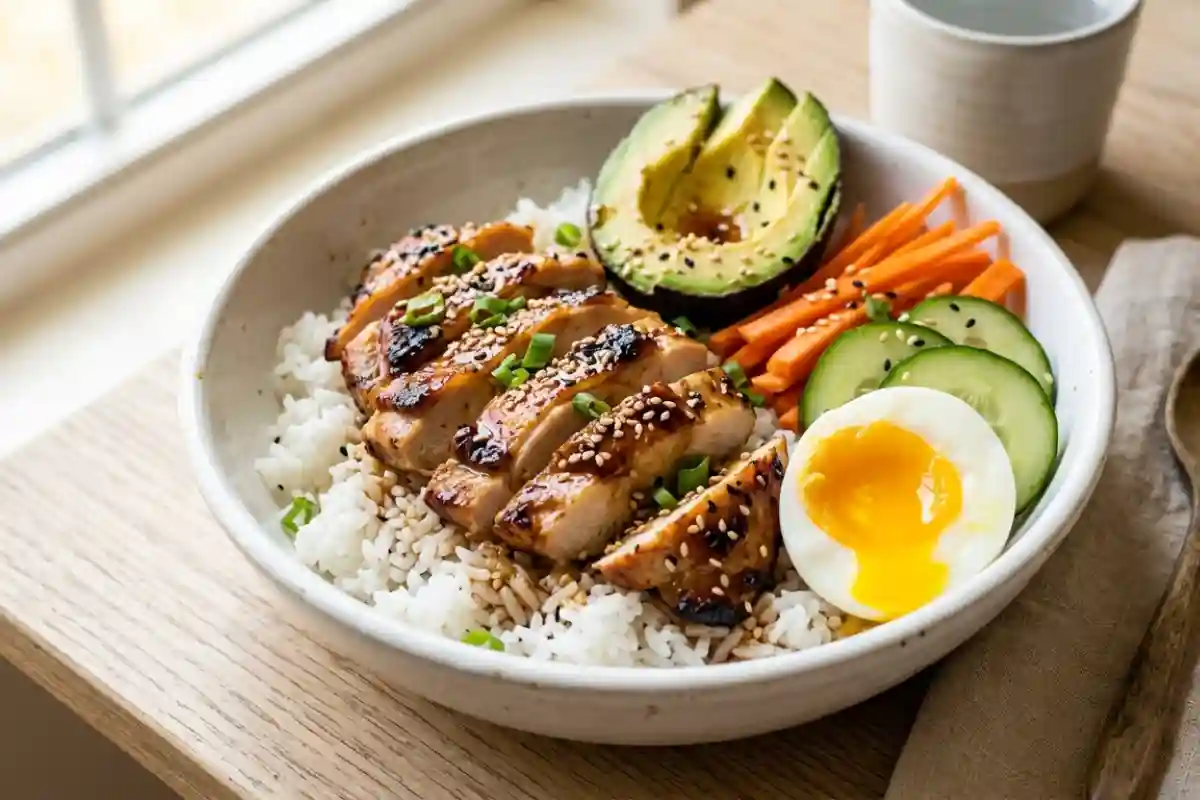
- Divide the cooked jasmine rice evenly among four bowls. Arrange the glazed chicken slices over the rice and spoon any remaining pan sauce on top. Finish each bowl with sliced scallions, toasted sesame seeds, and a drizzle of sriracha if using. Serve immediately.
Notes
- Storage: Transfer cooled chicken and rice to separate airtight containers and refrigerate for up to 4 days. Keeping them separate prevents the rice from absorbing all the sauce and turning gummy overnight.
- Reheating: Spread rice in a microwave-safe bowl with 1 tablespoon of water, cover with a damp paper towel, and microwave on high for 90 seconds. Reheat the chicken separately in a skillet over medium heat at 160°C / 320°F for 3 to 4 minutes, or until the internal temperature returns to 74°C / 165°F.
- Make-Ahead: The soy-ginger sauce can be mixed and refrigerated in a sealed jar for up to 5 days. The jasmine rice can be cooked up to 3 days ahead and stored in an airtight container. Sear and glaze the chicken fresh for best texture, as pre-cooked and reheated thighs can lose the crust.
- Substitution: Boneless, skinless chicken breast can replace thighs, but reduce the sear time on each side to 4 minutes and pull at the same 74°C / 165°F internal temperature to avoid a dry result. For a gluten-free build, confirm the tamari label reads “certified gluten-free,” as some tamari products are processed on shared equipment with wheat.
FAQs
What is the correct internal temperature for chicken thighs in a rice bowl?
The USDA-recommended safe internal temperature for all poultry is 74°C / 165°F, measured at the thickest point of the meat with an instant-read thermometer. For boneless, skinless chicken thighs specifically, many cooks pull them slightly past that mark to around 77°C / 170°F, because the higher collagen content in thigh meat actually produces a more tender and juicy result at slightly elevated temperatures compared to chicken breast. Breast meat should be pulled exactly at 74°C / 165°F since it has less connective tissue and dries out quickly. Always let the thermometer stabilize for 5 to 10 seconds before reading the temperature.
Can I use leftover rice for a chicken rice bowl?
Day-old jasmine rice is actually ideal for this recipe. Cold, refrigerated rice has lower moisture content and firmer individual grains, which means it absorbs the soy-ginger glaze without turning mushy. When reheating leftover rice, add 1 tablespoon of water per cup of rice and cover the bowl with a damp paper towel to reintroduce steam before microwaving for 90 seconds. If the rice has been refrigerated for more than 3 days, discard it rather than use it, since cooked rice can harbor Bacillus cereus spores that survive at refrigerator temperatures over time.
Why is my chicken rice bowl sauce thin and watery instead of glossy?
A thin sauce usually comes from one of two problems: the cornstarch slurry was not properly dissolved before adding it to the pan, or the sauce was not cooked long enough after deglazing to allow the starch granules to fully hydrate and swell. Make sure the cornstarch is dissolved in cold water rather than warm water before mixing it into the sauce, since starch clumps when added to liquid that is already hot. Once the sauce hits the skillet, it needs 60 to 90 seconds of active stirring over medium heat to reach the right viscosity. If the sauce is still too thin after that, a second 0.5 teaspoon of cornstarch dissolved in 1 teaspoon of cold water can be added and stirred in for another 30 seconds.
Is a chicken rice bowl good for meal prep, and how should I pack it?
Chicken rice bowls are one of the most practical meal-prep options for high-protein weekly eating precisely because all components scale easily and hold well under refrigeration. The most important packing principle is to keep the chicken and rice in separate compartments or containers until you are ready to eat, because the sauce will continue to hydrate the rice overnight and turn it dense and clumped by day two. Glass meal-prep containers with divided sections work better than single-compartment plastic containers for this reason. Properly separated and refrigerated, this bowl stays fresh for 4 days, making it suitable for a full work week of lunches if you prepare two batches on Sunday.
Can I make this chicken rice bowl without soy sauce?
Coconut aminos is the most common soy-free substitute for this recipe and works particularly well because its mild sweetness complements the honey and ginger without overpowering them. Use coconut aminos at a 1:1 ratio in place of soy sauce, but be aware that coconut aminos has a lower sodium content, so you may want to add a pinch of additional kosher salt to the sauce to compensate. Fish sauce is another option for umami depth, though the flavor profile shifts significantly toward Southeast Asian territory. For a fully soy-free and gluten-free bowl, tamari is not an appropriate substitute since it is still soy-based, so coconut aminos remains the clearest path.
Why does my chicken stick to the pan and not develop a crust?
Sticking and poor browning have a common root cause: the pan was not hot enough before the chicken went in, or the chicken surface was still wet when it made contact with the oil. Moisture on the surface of the chicken creates steam, which prevents the Maillard reaction from happening and causes the protein to bond to the pan before the crust has time to form and release naturally. Always pat thighs completely dry before seasoning, and let the oil heat until it shimmers visibly before adding any protein. A 12-inch stainless steel or cast iron skillet holds heat more consistently than a nonstick pan for this type of sear, and resists temperature drops when cold chicken hits the cooking surface.