

Few dishes have the staying power of a well-built chicken casserole. What makes it work is not any single ingredient but the method: bone-in chicken pieces braise slowly in a covered Dutch oven, releasing collagen into the cooking liquid until the sauce develops a body that no cornstarch slurry can replicate. The technique traces back to French farmhouse cooking, where the word “casserole” referred to the vessel before it ever described the dish itself.
From a nutritional standpoint, bone-in, skin-on chicken thighs contribute significantly more iron and zinc than breast meat, and the long braise means the fat renders fully into the liquid rather than sitting on the surface. A single serving lands around 420 calories with close to 35 grams of protein, making it a genuinely filling plate without relying on heavy starches. If you are building a weekly meal-prep rotation, this recipe holds exceptionally well across three days in the refrigerator.
For weeknight cooking, the hands-on time here is minimal. Once the chicken is seared and the aromatics are softened, the oven does the work. Pair it with a simple roasted vegetable side or serve alongside a pot of chicken and rice to stretch it further.
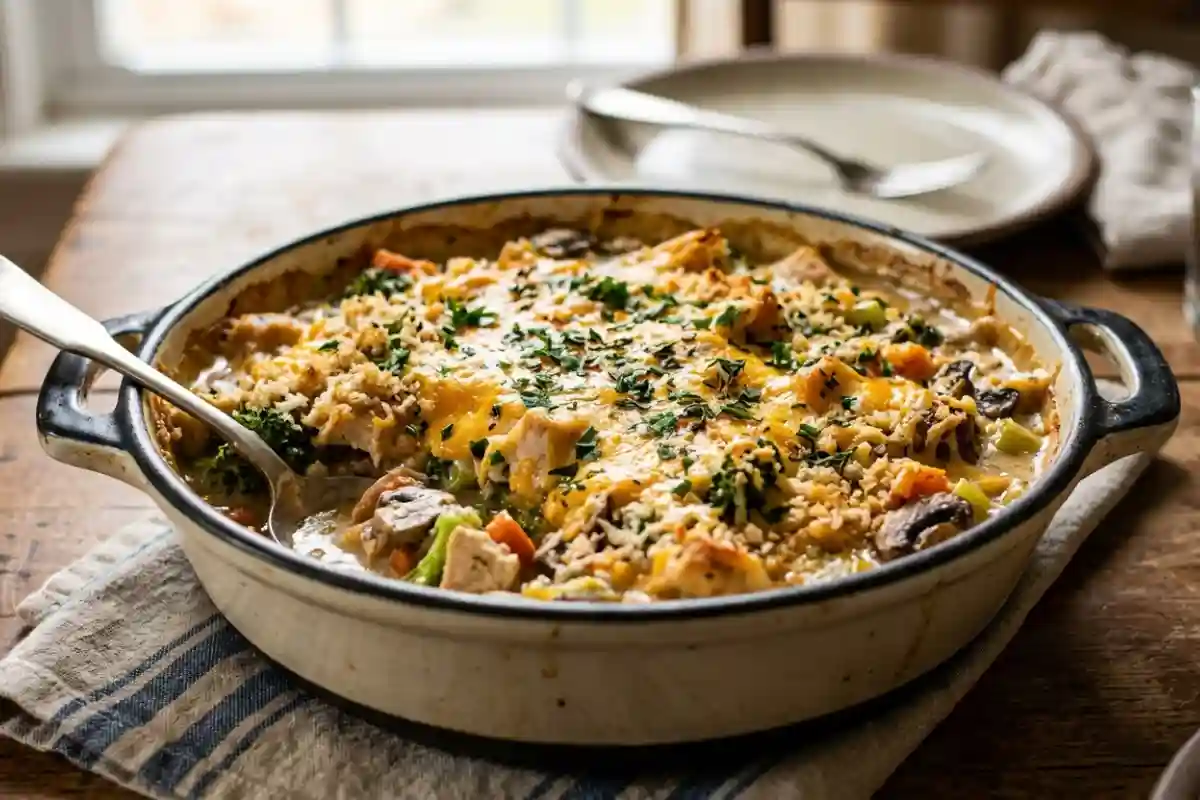
Chicken Casserole
Ingredients
Equipment
Method
- Set the oven to 175°C / 350°F and position a rack in the lower third. Allowing the oven to fully preheat before the casserole goes in ensures even braising from the start rather than a slow, uneven climb to temperature.
- Pat the chicken thighs completely dry with paper towels, then season all surfaces evenly with the sea salt and black pepper. Dry skin is not just about texture – moisture on the surface steams rather than sears, and a pale, rubbery skin at this stage cannot be recovered later.
- Heat the oil in a Dutch oven or deep oven-safe casserole over medium-high heat on the stovetop until it shimmers. Lay the thighs in skin-side down, working in two batches if necessary to avoid crowding, and cook for 7 minutes without disturbing them. The skin should release cleanly from the pot and show a deep golden-brown color before you flip. Sear the flesh side for 3 minutes, then transfer the thighs to a plate.
- Reduce the heat to medium and add the diced onion to the fat remaining in the pot. Cook, stirring occasionally, for 5 minutes until softened and translucent at the edges. Add the garlic and cook for 1 minute more, stirring constantly, until fragrant. The fond on the pot bottom should smell nutty rather than acrid at this point.
- Push the onion and garlic to the sides and add the tomato paste directly to the center of the pot. Cook the paste undisturbed for 2 minutes, letting it darken slightly against the hot metal. This step drives off the raw, tinny flavor and adds a layer of umami depth to the braising liquid.
- Pour in the white wine and use a wooden spoon to scrape up every bit of fond from the pot bottom. Let it reduce for 2 minutes, then add the chicken stock, thyme, rosemary, and bay leaves. Stir to combine, then nestle in the carrots, celery, and baby potatoes.
- Set the seared chicken thighs back into the pot skin-side up, positioning them so the skin sits above the liquid rather than submerged. Cover with the lid and transfer to the preheated oven. Braise at 175°C / 350°F for 45 minutes. At the end of the braise, the vegetables will be fork-tender and the exposed chicken skin will have crisped slightly around its edges.
- Probe the thickest part of a thigh with an instant-read thermometer, avoiding the bone. The chicken is safe and fully cooked at an internal temperature of 74°C / 165°F, though thighs are generally best eating somewhere around 85°C / 185°F, where the collagen has fully broken down and the meat pulls easily. If needed, return the pot, uncovered, for an additional 10 minutes.
- Remove the bay leaves and let the casserole rest uncovered for 5 minutes before serving. Scatter the fresh parsley over the top at the table rather than in the kitchen so it stays bright and green against the braise.
FAQs
Can I use boneless skinless chicken breasts instead of bone-in thighs?
Boneless, skinless chicken breasts will work in terms of food safety, but the result is a notably different dish. Breast meat has far less connective tissue and intramuscular fat than bone-in thighs, which means it does not benefit from long braising the way thighs do. At 45 minutes in a 175°C / 350°F oven, breasts will overcook and turn dry. If you want to use chicken breasts, reduce the braise time to 20 to 25 minutes and check the internal temperature at 20 minutes. Bone-in, skin-on thighs are strongly preferred here because the collagen they release thickens the braising liquid naturally and keeps the meat moist throughout.
My sauce is too thin after braising. How do I fix it?
A thin sauce after braising usually means too much liquid was added or the lid was slightly ajar, allowing steam to escape rather than recirculate. To fix it, remove the chicken and vegetables to a warm plate and return the pot to the stovetop over medium-high heat. Let the braising liquid reduce uncovered for 8 to 10 minutes, stirring occasionally, until it coats a spoon. If you want a thicker result without reducing, whisk 1 tablespoon of cornstarch with 2 tablespoons of cold water and stir it into the simmering liquid, cooking for 2 minutes until it tightens. This method keeps the dish gluten-free.
Do I have to use wine, or can I leave it out entirely?
The wine serves two purposes: it deglazes the fond from the pot bottom and adds acidity that balances the richness of the chicken fat and tomato paste. If you prefer to skip it, replace the 240ml of white wine with an equal volume of additional low-sodium chicken stock plus 1 tablespoon of apple cider vinegar to replicate the acidity. The finished dish will be slightly less complex in flavor but still very good. Cooking the wine for 2 minutes before adding the stock burns off most of the alcohol, so the dish is generally suitable for those who avoid drinking wine but are comfortable with trace residual alcohol in cooked food.
Can this chicken casserole be made in a slow cooker?
Yes, with one important adjustment. The searing step on the stovetop should not be skipped even when using a slow cooker, because browning the chicken and caramelizing the aromatics builds the flavor foundation that slow cooking alone cannot create. After completing steps 2 through 6 on the stovetop, transfer everything to a slow cooker and cook on the low setting for 6 hours or the high setting for 3 hours. Keep in mind that slow cookers trap moisture more aggressively than a Dutch oven in the oven, so the sauce will be thinner and may need to be reduced separately on the stovetop before serving.
How do I know the chicken is done without a thermometer?
An instant-read thermometer is the most reliable way to confirm doneness, and chicken thighs should read at least 74°C / 165°F for food safety. Without one, the most useful physical test is to pierce the thickest part of a thigh with a thin knife or skewer: the juices should run clear with no pink tinge, and the meat should feel firm without resistance. For braised thighs specifically, the meat will also begin to pull slightly away from the bone when fully cooked, and a fork inserted into the flesh should slide in with minimal effort. Relying on color alone is not reliable because myoglobin in thigh meat can sometimes keep a pinkish hue even when safely cooked through.
What vegetables can I add or swap to change up the casserole?
Root vegetables and alliums hold up well to the 45-minute braise and are the safest additions: parsnips, turnips, and sweet potatoes all work in place of or alongside the carrots and potatoes. Mushrooms are a strong add-in because they absorb the braising liquid and contribute umami without softening to mush. Avoid delicate vegetables like zucchini, spinach, or peas going in at the start, as they will overcook entirely. Add those in the last 5 to 8 minutes of braising time if you want them in the dish. Canned white beans stirred in during the last 10 minutes are another option if you want to add plant-based protein and bulk without increasing the calorie count significantly.