
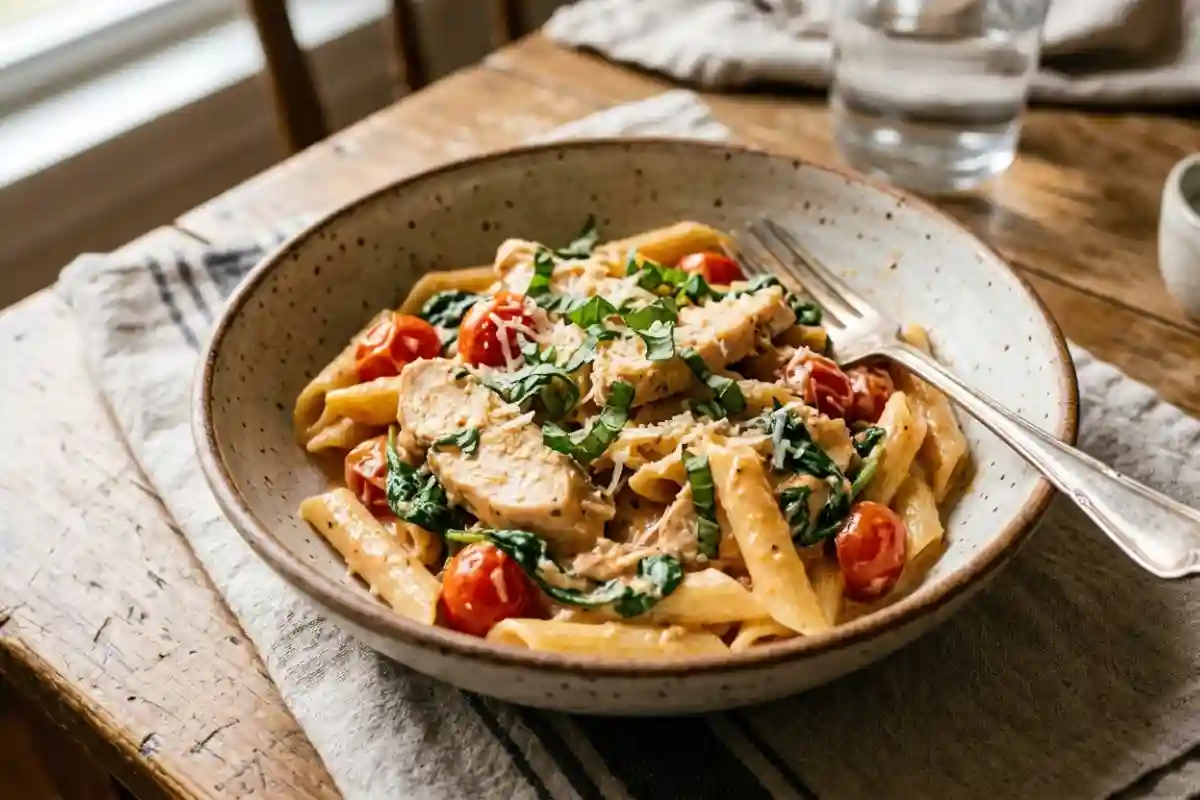
Chicken pasta is a stovetop pasta dish that combines sauteed chicken breast with al dente penne in a pan sauce built from garlic, white wine, and chicken stock. The dish draws from Italian-American cooking traditions, where pasta and protein are finished together in a single pan to unify the flavors.
One serving of chicken pasta provides 42 grams of protein and approximately 480 calories. The dish qualifies as a high-protein meal and adapts easily to a dairy-free framework by omitting the finishing butter. Chicken pasta suits weeknight family dinners, weekly meal prep, and casual entertaining for groups of four or more.
Chicken pasta shares a technique foundation with chicken piccata, where a fond-based pan sauce finishes over high heat to coat every piece. This recipe uses a dry brine of kosher salt applied 30 minutes before cooking, which draws surface moisture out of the chicken and produces a deeper sear.
Ingredients
Equipment
Method
- Dry Brine the Chicken: Place the chicken breasts on a cutting board and pat them completely dry with paper towels. Sprinkle 1 teaspoon of kosher salt and 0.5 teaspoon of black pepper evenly across both sides of each breast. Set the seasoned chicken on a wire rack over a rimmed baking sheet and leave it uncovered at room temperature for 30 minutes. The salt draws surface moisture out of the meat, which evaporates during the rest period and produces a drier exterior that sears rather than steams.
- Slice the Chicken: Place each rested chicken breast flat on the cutting board. Hold the breast steady with your palm and cut horizontally through the center of the breast to create two even cutlets of uniform thickness, approximately 1.5cm / 0.6in each. Cut each cutlet crosswise into strips approximately 2.5cm / 1in wide. Uniform strips ensure even cooking and allow the chicken to finish at the same time as the pasta sauce.
- Boil the Pasta: Fill a large pasta pot with 4 liters / 1 gallon of water and bring it to a rolling boil over high heat. Add 1 tablespoon of kosher salt to the boiling water, then add 300g / 10.5oz of dry penne rigate. Cook the penne for 7 minutes, stirring once at the 3-minute mark, until the pasta is al dente with a firm bite at its core. Reserve 120ml / 0.5 cup of pasta cooking water before draining the penne through a colander. Do not rinse the pasta.
- Sear the Chicken Strips: Heat 1 tablespoon of olive oil in a 12-inch stainless steel skillet over medium-high heat for 90 seconds until the oil shimmers and a small drop of water evaporates on contact. Add the chicken strips in a single layer, working in two batches if needed to avoid crowding the pan. Cook the first side for 3 minutes without moving the strips until a golden-brown crust forms and the chicken releases cleanly from the pan. Flip each strip and cook the second side for 2 minutes until the internal temperature reads 74°C / 165°F on an instant-read thermometer. Transfer the cooked strips to a clean plate and tent loosely with foil.
- Build the Pan Sauce: Reduce the heat to medium and add the remaining 1 tablespoon of olive oil to the same skillet. Add the 4 sliced garlic cloves and the red pepper flakes to the residual oil and fond. Stir constantly with a wooden spoon for 90 seconds until the garlic turns pale gold and fragrant. Pour in 60ml / 0.25 cup of dry white wine and scrape the browned fond from the bottom of the skillet with the wooden spoon. Let the wine reduce for 2 minutes until the sharp alcohol aroma dissipates and approximately half the liquid remains.
- Finish with Stock and Pasta: Pour 240ml / 1 cup of low-sodium chicken stock into the skillet and bring the sauce to a simmer over medium heat for 3 minutes until the liquid reduces by one-third and coats the back of a spoon. Add the drained penne to the skillet along with the cooked chicken strips and 30g / 1oz of baby spinach. Toss everything together using tongs for 1 minute until the spinach wilts completely and each piece of pasta is coated in the sauce. Add reserved pasta water, 2 tablespoons at a time, if the sauce appears too thick.
- Emulsify and Serve: Remove the skillet from heat. Add 1 tablespoon of unsalted butter and 30g / 1oz of grated Parmigiano-Reggiano to the skillet. Toss vigorously with tongs for 30 seconds until the butter melts completely and the cheese dissolves into the sauce, creating a glossy, cohesive coating on the pasta and chicken. Divide the chicken pasta evenly among four shallow bowls and top each portion with freshly chopped flat-leaf parsley.
Notes
- Storage: Transfer cooled chicken pasta to an airtight container and refrigerate for up to 3 days. Store the pasta and any reserved pasta water separately if possible, as the pasta continues to absorb the sauce during refrigeration.
- Reheating: Add the refrigerated chicken pasta to a skillet over medium heat with 2 tablespoons of water or chicken stock. Stir and toss for 3 minutes until the sauce re-emulsifies and the chicken reaches an internal temperature of 74°C / 165°F on an instant-read thermometer.
- Make-Ahead: Dry brine the chicken up to 12 hours in advance and refrigerate it uncovered on a wire rack. Slice the garlic and measure all remaining ingredients up to 24 hours ahead and store them in small covered containers in the refrigerator.
- Substitution: Boneless, skinless chicken thighs replace chicken breasts with the same slicing and searing method. Thighs require 1 additional minute per side during the sear step and must still reach an internal temperature of 74°C / 165°F. Replace white wine with an equal volume of low-sodium chicken stock for an alcohol-free version.
- Freezing: Freeze cooled chicken pasta in a freezer-safe container for up to 2 months. Thaw overnight in the refrigerator before reheating. The pasta texture softens after freezing, so this method suits meal prep applications where texture is less critical.
- Pasta Water Tip: Always reserve at least 120ml / 0.5 cup of pasta cooking water before draining. The starch dissolved in the water helps the sauce cling to the penne and prevents the finished dish from drying out during the final toss in the skillet.
FAQ
What is chicken pasta?
Chicken pasta is a stovetop pasta dish built from sauteed chicken and cooked pasta finished together in a pan sauce. The sauce typically uses a combination of garlic, white wine or stock, and a fat such as butter or olive oil to create a cohesive coating. Chicken pasta belongs to the broader category of Italian-American pasta dishes where protein and starch are cooked separately and unified in a single finishing step.
How do you keep chicken moist in pasta?
Slicing chicken breasts into uniform strips before cooking reduces the thickness of each piece, which shortens the time the meat spends over heat and limits moisture loss. Pulling the chicken off heat at exactly 74°C / 165°F prevents overcooking. Adding the seared chicken back into the pan sauce during the final toss, rather than cooking it directly in the liquid, preserves the sear while the sauce rehydrates the exterior of each strip.
What pasta shape works best for chicken pasta?
Penne rigate, rigatoni, and ziti all work well for chicken pasta because their tubular shape and ridged exterior trap the pan sauce inside and outside each piece. Short, ridged shapes hold up to tossing in the skillet without breaking. Long pasta shapes such as spaghetti or linguine work with lighter, oil-based sauces but are harder to toss with chunky chicken strips without tangling.
Can you make chicken pasta without wine?
Low-sodium chicken stock replaces dry white wine in a 1-to-1 ratio in the pan sauce. The stock provides the liquid volume needed to deglaze the fond from the skillet and build the sauce base. The finished dish will have a milder, less acidic flavor profile than the wine version. A squeeze of fresh lemon juice added at the end of cooking approximates some of the brightness that white wine provides.
What internal temperature should chicken reach in pasta?
Chicken must reach an internal temperature of 74°C / 165°F as measured by an instant-read thermometer inserted into the thickest strip. This temperature applies to both chicken breast and chicken thigh cuts. Check the temperature during the sear step, before adding the chicken to the sauce, to avoid overcooking the strips during the final toss in the skillet.
Is chicken pasta good for meal prep?
Chicken pasta stores well for meal prep when refrigerated in airtight containers for up to 3 days. Portioning the finished dish into four equal containers immediately after cooking simplifies weekday lunches or dinners. The pasta absorbs the sauce during refrigeration, so adding 1 to 2 tablespoons of chicken stock during reheating restores the original sauce consistency. Chicken pasta works alongside other high-protein meal prep recipes as part of a structured weekly cooking plan.
How do you make chicken pasta more saucy?
Reserve at least 120ml / 0.5 cup of pasta cooking water before draining the penne, then add it to the skillet during the final toss 2 tablespoons at a time until the sauce reaches the desired consistency. Increasing the chicken stock volume from 240ml / 1 cup to 360ml / 1.5 cups and extending the reduction step by 2 minutes also produces a more generous amount of sauce. The starch in the pasta water binds with the fat in the butter and oil to create a thicker, glossier coating.
What do you serve with chicken pasta?
A crisp green salad dressed with lemon vinaigrette balances the richness of the pan sauce and adds textural contrast to the meal. Garlic bread or a sliced baguette works alongside the pasta to soak up the remaining sauce in the bowl. For a vegetable side, roasted broccolini or sauteed asparagus complement the garlic and white wine flavors in the dish without competing with the primary protein.