

Chicken thighs are the bone-in or boneless dark-meat portions cut from the upper leg of a broiler chicken. They belong to the poultry category and are classified as a high-fat, high-protein protein source relative to breast meat. The thigh originates from European farmhouse and rotisserie traditions, where fatty cuts were cooked over live fire or in cast-iron vessels to render the skin crisp. Roasting and pan-searing are the two methods most suited to the natural collagen and fat content of this cut. A 180g bone-in thigh delivers approximately 25g of protein and 220 to 260 calories, making it a calorie-dense option for strength-focused diets. Chicken thighs carry no gluten and suit ketogenic, halal, and high-protein dietary frameworks without modification. The cut performs well on a Sunday batch-cook rotation and holds its texture after refrigeration or freezing better than breast meat. Home cooks who need a forgiving weeknight protein that resists drying out will find the thigh highly reliable. Pairing chicken thighs with roasted root vegetables creates a complete one-pan meal with minimal cleanup. Those who prefer a leaner profile may also explore chicken breast as a complementary cut within the broader chicken recipe collection.
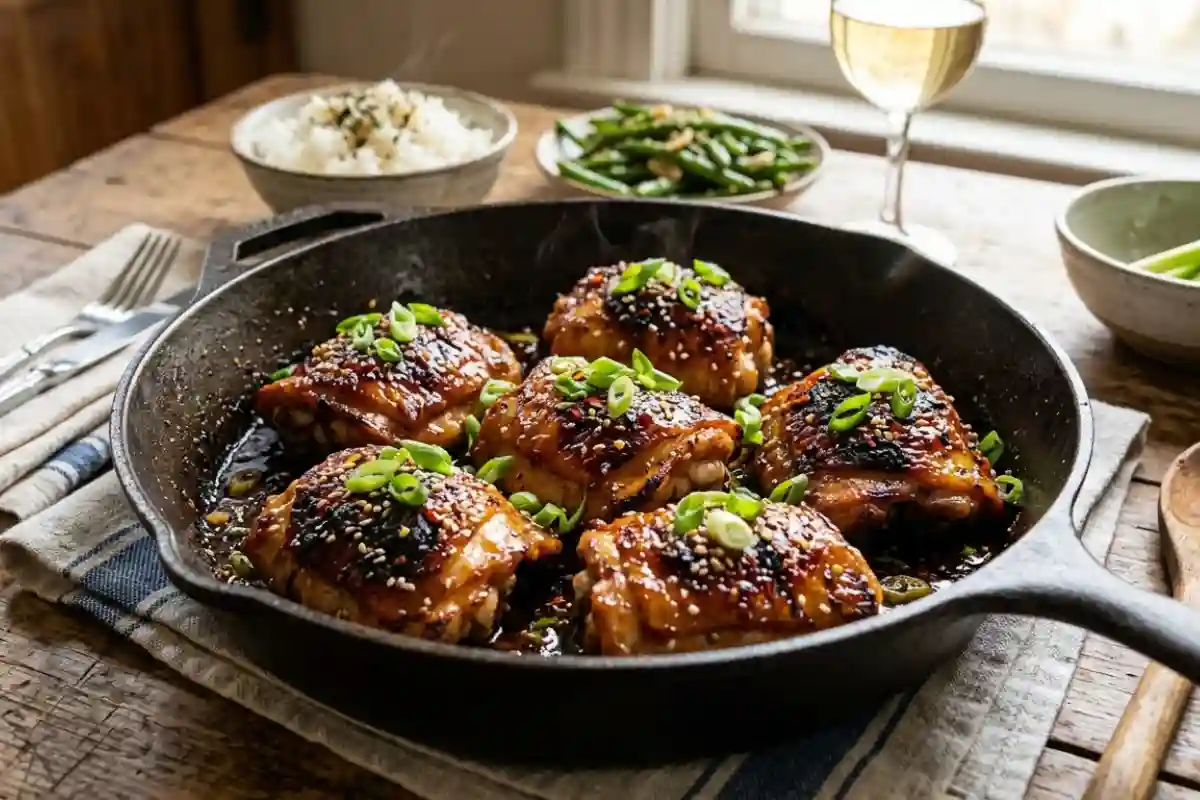
Chicken Thighs Recipe
Ingredients
Equipment
Method
- Dry the Chicken: Pat all 4 chicken thighs thoroughly dry with paper towels on both sides. Removing surface moisture is essential for a crisp skin during roasting. Work at room temperature for at least 10 minutes before seasoning.
- Season the Thighs: Combine 1.5 tsp kosher salt, 1 tsp black pepper, 1 tsp smoked paprika, 0.5 tsp garlic powder, and 0.5 tsp onion powder in a small bowl. Rub the spice blend evenly over all surfaces of each thigh, pressing the seasoning firmly under the skin where possible.
- Preheat the Oven: Position an oven rack in the upper-middle slot and preheat the oven to 220°C (425°F). A high initial temperature drives rapid skin rendering, which produces colour and texture within the first 15 minutes of roasting.
- Sear the Skin Side: Heat 1 tbsp avocado oil in an oven-safe skillet over medium-high heat until the oil shimmers visibly, approximately 2 minutes. Place the thighs skin-side down and sear undisturbed for 5-6 minutes until the skin releases from the pan and turns deep golden brown.
- Flip and Transfer to Oven: Flip each thigh so the skin faces up, then transfer the skillet directly to the preheated 220°C (425°F) oven. The fond left on the pan will contribute to the pan sauce or drippings.
- Roast the Thighs: Roast at 220°C (425°F) for 25-30 minutes until the skin is deeply caramelised and crackling at the edges. Begin checking the internal temperature at the 22-minute mark to avoid carryover overcooking.
- Check Internal Temperature: Insert an instant-read thermometer into the thickest part of the thigh, avoiding the bone. The reading must reach 74°C (165°F) minimum. For optimal texture and full collagen conversion in dark meat, a target of 80-82°C (176-180°F) is preferred.
- Rest and Serve: Transfer the cooked thighs to a wire rack and rest for 5 minutes before cutting. Resting allows the internal juices to redistribute, preventing liquid loss when the thigh is sliced.
Notes
- Storage: refrigerate cooked chicken thighs in an airtight container for up to 4 days at or below 4°C (40°F).Freezing: freeze in a single layer on a tray for 1 hour before transferring to a zip-lock bag; keeps for up to 3 months at -18°C (0°F).
- Reheating: warm in a 180°C (350°F) oven for 10–12 minutes to restore skin crispness; microwave reheating softens the skin.
- Make-ahead: season thighs up to 24 hours in advance, uncovered on a rack in the refrigerator, to dry-brine the skin for superior crispness.
- Boneless substitution: boneless, skinless thighs follow the same seasoning method but roast for 20-22 minutes at 200°C (400°F) to an internal temperature of 74°C (165°F).
- Collagen note: dark meat contains more intramuscular fat and connective tissue than breast meat, making it significantly more forgiving when cooked past the minimum safe temperature.
People Ask Questions
What are chicken thighs?
A: Chicken thighs are the upper-leg sections of a broiler chicken, sold bone-in skin-on, bone-in skinless, or boneless skinless. They are classified as dark meat due to a higher concentration of myoglobin and intramuscular fat compared to breast meat. A single bone-in thigh weighs approximately 150-200g and yields 22–27g of protein per serving.
How do you roast chicken thighs?
Pat the thighs dry, season with salt and spices, sear skin-side down in an oven-safe skillet over medium-high heat for 5-6 minutes, then flip and roast at 220°C (425°F) for 25-30 minutes. The combination of a stovetop sear and a high-heat oven finish produces rendered, crackling skin and fully cooked interior meat.
What internal temperature should chicken thighs reach?
The USDA minimum safe internal temperature for chicken thighs is 74°C (165°F). However, dark meat benefits from cooking to 80-82°C (176-180°F), at which point the collagen in the thigh fully converts to gelatin, producing a juicier, more tender result. Use an instant-read thermometer inserted into the thickest part of the thigh, away from the bone.
How long do cooked chicken thighs keep, and can you freeze them?
Cooked chicken thighs keep for up to 4 days in an airtight container in the refrigerator at or below 4°C (40°F). For longer storage, freeze in a single layer first, then transfer to airtight bags; frozen thighs remain safe for up to 3 months at -18°C (0°F). Thaw overnight in the refrigerator before reheating.
What can I substitute for bone-in chicken thighs?
Boneless, skinless chicken thighs are the closest substitute and follow the same seasoning method with a reduced roast time of 20-22 minutes at 200°C (400°F). Bone-in chicken drumsticks offer a similar fat and collagen profile with only a 5-minute increase in cook time. Bone-in turkey thighs can replace chicken thighs in braises and slow-cooked recipes with a 30-40% longer cook time.
What do you serve with chicken thighs?
Roasted chicken thighs pair well with roasted root vegetables such as carrots and parsnips, steamed or sautéed leafy greens such as spinach or kale, or cauliflower rice for a low-carbohydrate plate. For carbohydrate-inclusive meals, serve alongside roasted baby potatoes or a simple green salad with lemon vinaigrette. The pan drippings from the skillet reduce into a quick pan sauce to finish the plate.