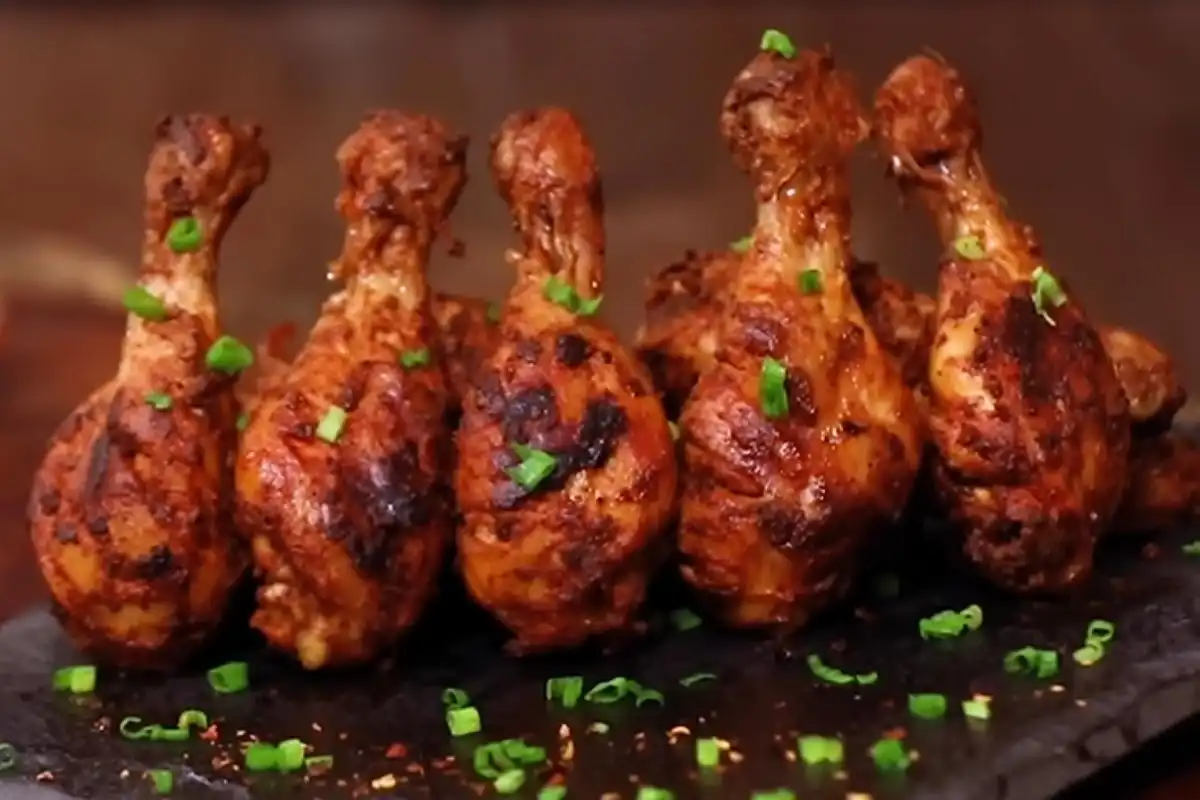

Chicken Satay is a Southeast Asian grilled skewer dish made from marinated chicken threaded onto bamboo or metal skewers and cooked over direct heat. The dish originates from Indonesia and appears widely across Thai, Malaysian, and Singaporean cuisines. Chicken Satay belongs to the broader family of chicken recipes that use high-heat grilling to develop charred, smoky exterior flavor.
One serving of Chicken Satay provides approximately 32 grams of protein and 280 calories. The dish qualifies for high-protein, gluten-free, and halal dietary frameworks when prepared with tamari in place of soy sauce. Chicken Satay suits casual backyard grilling, weeknight dinners, and party appetizer spreads. It works well for meal prep because the marinade can be prepared up to 48 hours in advance.
Chicken Satay pairs naturally with peanut sauce, which serves as both a dipping condiment and a flavor contrast to the savory, turmeric-forward marinade. This recipe uses a dry-rest technique after marinating, where the skewered chicken sits uncovered in the refrigerator for 30 minutes before grilling, which draws surface moisture away and produces deeper char marks on the grill.

Chicken Satay Recipe
Ingredients
Equipment
Method
- Place 12 bamboo skewers in a shallow dish or baking tray and cover them fully with cold water. Allow the skewers to soak for 30 minutes at room temperature. Soaking saturates the bamboo with water, which prevents the exposed ends from catching fire during grilling.
- Place the boneless, skinless chicken thighs on a cutting board and trim away any large pieces of visible fat. Slice each thigh lengthwise into strips approximately 2.5cm / 1in wide and 10cm / 4in long. Consistent strip dimensions ensure each piece marinates evenly and cooks to the same internal temperature across all 12 skewers.
- Combine the tamari, coconut milk, fish sauce, brown sugar, ground turmeric, ground coriander, ground cumin, white pepper, and minced garlic in a medium mixing bowl. Whisk the mixture for 60 seconds until the sugar dissolves and the turmeric disperses uniformly throughout the liquid. The marinade should appear a consistent golden-orange color with no visible clumps of spice.
- Add the sliced chicken strips to the bowl with the marinade and toss thoroughly using tongs or clean hands until every surface of every strip is coated. Cover the bowl with plastic wrap and refrigerate for 2 hours. A minimum of 2 hours allows the turmeric, cumin, and coriander to penetrate the surface layer of the chicken and bind flavor into the meat.
- Remove the marinated chicken from the refrigerator and thread one strip lengthwise onto each soaked bamboo skewer, weaving the skewer through the center of the strip in three points so the meat lies flat rather than bunching. Arrange the loaded skewers on a wire rack set over a baking sheet. Return them to the refrigerator uncovered for 30 minutes. The dry-rest period draws surface moisture away from the chicken, which produces deeper grill marks and a drier exterior char during cooking.
- Preheat an outdoor grill or stovetop grill pan over high heat for 5 minutes until the surface reaches approximately 230°C / 445°F. Brush the grill grates with 1 tablespoon of neutral oil using a folded paper towel held with tongs. The grill is ready when the oil immediately shimmers and produces light wisps of smoke on contact with the grates.
- Place the skewers on the oiled grill grates, leaving at least 2.5cm / 1in of space between each skewer. Grill the chicken for 4 minutes on the first side without moving them, until distinct char marks appear and the strips lift cleanly from the grates. Flip each skewer using tongs and grill for 4 minutes on the second side until the chicken is cooked through, shows char marks on both sides, and an instant-read thermometer inserted into the thickest part of the strip reads 74°C / 165°F.
- Transfer the finished skewers to a clean serving plate and allow them to rest for 3 minutes before serving. Resting allows the internal juices to redistribute throughout the meat, which keeps each strip moist when bitten. Serve the Chicken Satay alongside peanut sauce and fresh cucumber slices.
Notes
- Storage: Transfer cooled Chicken Satay skewers to an airtight container and refrigerate for up to 3 days. Remove the skewers from the chicken before storing to prevent the bamboo from absorbing moisture and softening the meat contact points.
- Reheating: Arrange refrigerated chicken strips on a wire rack set over a baking sheet. Reheat in an oven at 190°C / 375°F for 8 minutes until the exterior is warmed through and the internal temperature returns to 74°C / 165°F. Avoid microwaving, which creates steam and softens the charred exterior.
- Make-Ahead: Prepare the marinade and slice the chicken up to 48 hours in advance. Store the marinated chicken strips in a sealed container in the refrigerator. Thread the skewers no earlier than 2 hours before grilling so the marinade coating remains intact on the surface of each strip.
- Substitution: Boneless, skinless chicken breast works as a direct substitute for thighs. Breast meat is leaner and dries out more quickly over high heat, so reduce the grill time to 3 minutes per side and verify an internal temperature of 74°C / 165°F. Replace fish sauce with an equal amount of tamari to keep the recipe fully gluten-free and pescatarian-free.
- Freezing: Freeze fully cooked, cooled chicken strips in a single layer on a parchment-lined baking sheet for 1 hour, then transfer to a freezer-safe bag with the air pressed out. Freeze for up to 2 months. Thaw overnight in the refrigerator and reheat at 190°C / 375°F for 10 minutes until the internal temperature reaches 74°C / 165°F.
- Marinade Tip: Do not marinate the chicken for longer than 4 hours. Extended contact with fish sauce begins to break down the surface proteins of the chicken, which produces a mushy texture after grilling rather than a firm, slightly charred bite.
FAQs
What is Chicken Satay?
Chicken Satay is a Southeast Asian dish of marinated chicken strips threaded onto skewers and grilled over direct high heat. The dish originated in Indonesia and spread throughout Thai, Malaysian, and Singaporean cuisines. Traditional Chicken Satay uses a spice paste or liquid marinade containing turmeric, coriander, cumin, and lemongrass. It is served with peanut sauce as a standard accompaniment.
What cut of chicken is best for satay?
Boneless, skinless chicken thighs produce the most flavorful and moist result for Chicken Satay because their higher fat content resists the drying effect of direct high-heat grilling. Chicken breast works as a substitute but requires a shorter cook time of 3 minutes per side to avoid drying out. Thigh meat also absorbs the turmeric and cumin marinade more effectively due to its looser muscle fiber structure.
How long should you marinate chicken satay?
Marinate Chicken Satay for a minimum of 2 hours and a maximum of 4 hours in the refrigerator. A 2-hour marinade allows the turmeric, coriander, and cumin to penetrate the surface of the chicken and develop flavor. Marinating beyond 4 hours causes the fish sauce to begin breaking down the surface proteins of the chicken, which results in a soft, mushy texture after grilling.
What temperature should Chicken Satay reach when cooked?
Chicken Satay must reach an internal temperature of 74°C / 165°F to be safe to eat. Use an instant-read thermometer inserted into the thickest part of the strip to verify this temperature. The chicken should also show defined char marks on both sides and release cleanly from the grill grates, which are reliable visual doneness cues alongside the temperature reading.
What do you serve with Chicken Satay?
Chicken Satay is traditionally served with peanut sauce, which provides a creamy, nutty contrast to the smoky, spiced chicken. Fresh cucumber slices, pickled cucumber relish, and compressed rice cakes called ketupat are standard accompaniments in Indonesian and Malaysian serving traditions. For a lighter pairing, a simple cucumber salad with rice vinegar and sliced shallots works well alongside the skewers.
Can you make Chicken Satay in an air fryer?
Chicken Satay cooks successfully in an air fryer at 200°C / 390°F for 10 minutes, flipping the skewers at the 5-minute mark. Use metal skewers or trim bamboo skewers to fit within the air fryer basket without touching the heating element. The air fryer method produces a firm, slightly caramelized exterior, though it does not replicate the open-flame char marks of outdoor grilling.
Is Chicken Satay gluten-free?
Chicken Satay is gluten-free when prepared with tamari instead of standard soy sauce, which contains wheat. All other core marinade ingredients, including coconut milk, fish sauce, turmeric, cumin, and coriander, are naturally gluten-free. Always verify that the specific brand of fish sauce and tamari used carry a certified gluten-free label, as cross-contamination during manufacturing can affect some products.
Why do you soak bamboo skewers before grilling?
Soaking bamboo skewers in cold water for 30 minutes before grilling saturates the bamboo with moisture, which significantly slows the rate at which the exposed ends ignite over direct heat. Dry bamboo skewers can catch fire within 2 minutes on a high-heat grill, which chars the tips and risks burning through the skewer near the meat. Metal skewers eliminate this concern entirely and are a practical alternative for frequent grilling.