

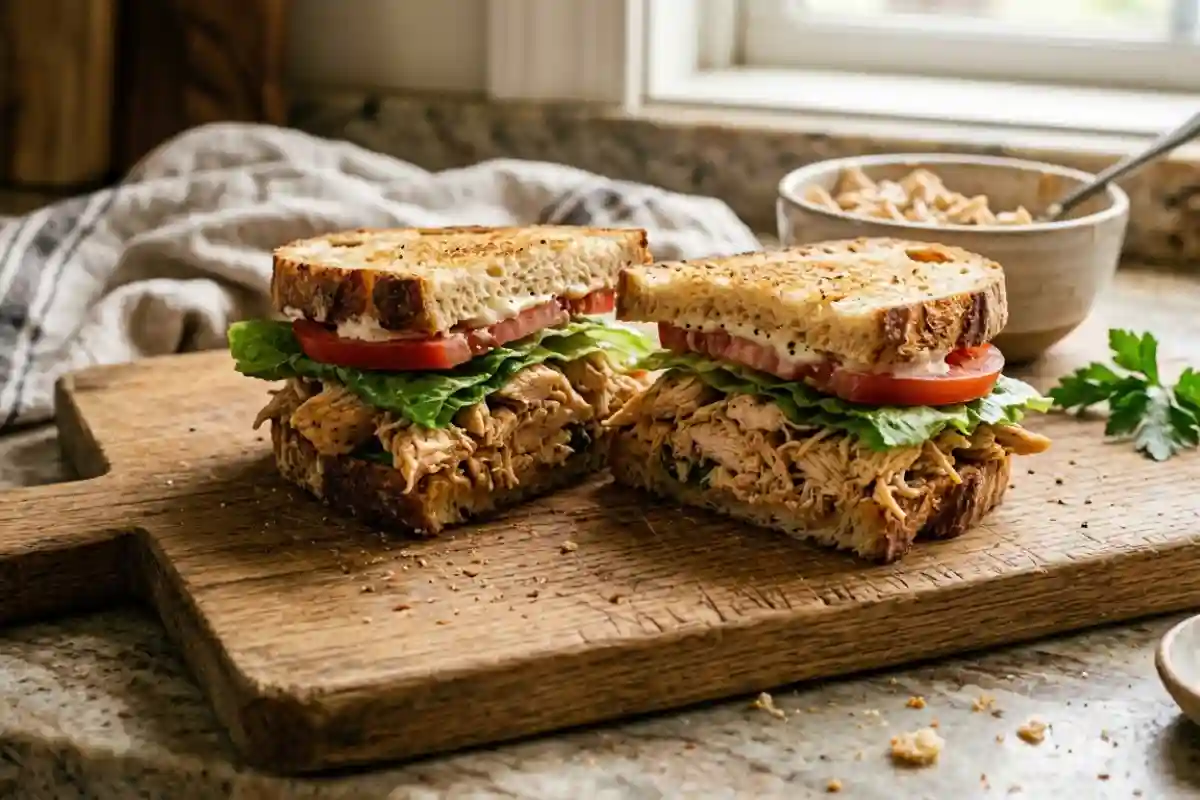
A chicken sandwich is a handheld American dish built on a pan-fried or oven-baked chicken breast fillet served inside a toasted bun with sauce and toppings. The cooking method is shallow-frying in a seasoned flour-and-buttermilk coating, which produces a crisp exterior around a juicy interior. Chicken sandwiches belong to the broader family of chicken recipes and represent one of the most widely prepared protein-forward lunch and dinner formats in American home cooking.
One serving of this chicken sandwich delivers approximately 42 grams of protein and 520 calories. The recipe qualifies as a high-protein meal and can be adapted to a dairy-free framework by substituting the buttermilk with oat milk and apple cider vinegar. This dish suits weeknight dinners, casual backyard gatherings, and meal prep scenarios where portioned proteins are needed throughout the week.
This chicken sandwich shares a preparation lineage with Nashville Hot Chicken, which also uses a buttermilk brine and spiced flour coating before frying. One preparation note unique to this recipe is the double-dredge technique, where each fillet passes through the flour coating twice to build a thicker, shatteringly crisp crust.
Chicken Sandwich
Ingredients
Equipment
Method
- Pound the Chicken Fillets: Place one chicken breast inside a resealable plastic bag on a cutting board. Strike the thickest part with a meat mallet, working outward from the center in firm, even strokes, until the fillet reaches a uniform 1.5cm / 0.6in thickness. Repeat with the remaining 3 breasts. Even thickness prevents the edges from drying out before the center reaches a safe internal temperature.
- Brine in Buttermilk: Whisk together the buttermilk and hot sauce in a medium bowl until fully combined. Submerge all 4 pounded fillets in the buttermilk mixture, pressing them down so each fillet is fully coated. Cover the bowl with plastic wrap and refrigerate for 30 minutes. The lactic acid in buttermilk begins to tenderize the muscle fibers, and the hot sauce adds a mild underlying heat to the finished sandwich.
- Build the Dredging Mixture: Combine the all-purpose flour, cornstarch, 1 teaspoon kosher salt, garlic powder, smoked paprika, onion powder, black pepper, and cayenne pepper in a wide, shallow dish. Whisk the dry ingredients together for 30 seconds until evenly distributed. The cornstarch raises the starch concentration in the coating, which converts to a more brittle, glass-like crust during frying.
- Double-Dredge Each Fillet: Lift one fillet from the buttermilk and allow the excess to drip off for 5 seconds. Lay the fillet in the flour mixture and press firmly on both sides, working the coating into any surface folds. Return the fillet to the buttermilk for 3 seconds, then return it to the flour for a second press-and-coat. Set the coated fillet on a wire rack. Repeat with the remaining 3 fillets. Resting the coated fillets on the rack for 5 minutes before frying allows the coating to hydrate and bond to the surface.
- Heat the Frying Oil: Pour the neutral cooking oil into a 12-inch cast iron skillet and set it over medium-high heat for 3 minutes until the oil reaches 175°C / 347°F, confirmed with an instant-read thermometer. At this temperature, a pinch of flour dropped into the oil will sizzle immediately and rise to the surface.
- Fry the Chicken Fillets: Using tongs, lower 2 coated fillets gently into the hot oil, laying them away from you to avoid splatter. Fry for 5 minutes on the first side without pressing or moving them until the coating is deep golden brown and the crust releases cleanly from the skillet. Flip each fillet once with tongs and fry for 4 minutes on the second side until the internal temperature reaches 74°C / 165°F, confirmed with an instant-read thermometer inserted into the thickest point. Transfer the cooked fillets to the wire rack. Allow the oil to return to 175°C / 347°F for 1 minute before frying the second batch.
- Fry the Second Batch: Lower the remaining 2 coated fillets into the oil using tongs. Fry for 5 minutes on the first side until the crust is deep golden brown and fully set. Flip and fry for 4 minutes on the second side until the internal temperature reaches 74°C / 165°F at the thickest point. Transfer to the wire rack and season immediately with the remaining 0.5 teaspoon kosher salt while the crust is still hot.
- Make the Sandwich Sauce: Stir together the mayonnaise and dill pickle brine in a small bowl until the mixture is smooth and uniform. The pickle brine adds acidity and salt to the sauce, which cuts through the richness of the fried coating. Spread 1 tablespoon of sauce on the cut side of each toasted bun top.
- Assemble Each Sandwich: Place one lettuce leaf on each toasted bun bottom, followed by one fried chicken fillet, 2 tomato rounds, and 1 dill pickle slice. Press the sauced bun top firmly onto the stack. Serve each chicken sandwich immediately while the crust retains its texture.
People Ask Questions
What is a chicken sandwich?
A chicken sandwich is an American handheld dish consisting of a cooked chicken breast or thigh fillet served inside a split, toasted bun with condiments, lettuce, tomato, and pickle. The fillet is typically coated in a seasoned flour dredge and shallow-fried or grilled. The chicken sandwich is one of the most widely ordered items at American fast-casual restaurants and is straightforward to replicate at home using a buttermilk brine and double-dredge technique.
Why do you brine chicken in buttermilk before frying?
Buttermilk contains lactic acid, which gently denatures the surface proteins of the chicken fillet without breaking down the interior muscle fibers the way a strong acidic marinade would. This process creates a more tender, moist interior in the finished fillet. The buttermilk coating also acts as the adhesive layer that binds the seasoned flour coating to the surface of the chicken during dredging.
What internal temperature should a chicken sandwich fillet reach?
The chicken fillet in a chicken sandwich must reach an internal temperature of 74°C / 165°F at the thickest point, as measured with an instant-read thermometer. This temperature ensures the destruction of Salmonella and other harmful pathogens present in raw poultry. Pulling the fillet from the oil at exactly 74°C / 165°F and resting it on a wire rack preserves the maximum amount of juice in the interior.
What is the double-dredge method and why does it matter?
The double-dredge method passes each buttermilk-coated chicken fillet through the seasoned flour mixture twice, with a brief return to the buttermilk between each pass. This builds a thicker, more textured coating than a single dredge produces. The extra layer of flour and cornstarch creates the craggy, irregular surface that becomes the signature shatteringly crisp crust when fried at 175°C / 347°F.
Can you make a chicken sandwich without frying?
A chicken sandwich can be made without frying by baking the dredged fillets on a wire rack set over a rimmed baking sheet at 220°C / 425°F for 20 minutes until the internal temperature reaches 74°C / 165°F. Spray the coated fillets generously with cooking spray before baking to promote browning of the flour crust. The baked version produces a firmer, drier crust compared to the shallow-fried version, but delivers a comparable flavor profile with significantly less added fat.
What is the difference between a chicken sandwich and Nashville Hot Chicken?
A chicken sandwich and Nashville Hot Chicken share the same buttermilk brine and seasoned flour coating, but Nashville Hot Chicken uses a cayenne-heavy spice paste that is brushed onto the fillet immediately after frying. The spice paste is typically made from cayenne pepper, brown sugar, garlic powder, and hot frying oil. Nashville Hot Chicken is also traditionally served on white sandwich bread with pickles rather than on a toasted brioche bun.
Can you make a chicken sandwich ahead of time for meal prep?
Chicken sandwich fillets are well suited for meal prep because the fried fillets reheat effectively in an oven at 205°C / 400°F for 10 minutes without losing significant texture. Store the fried fillets separately from the buns and toppings in airtight containers for up to 3 days in the refrigerator. Assemble each sandwich immediately before eating to keep the crust crisp and the bun from becoming soggy. For high-protein meal prep applications, pairing the fillets with a grain bowl instead of a bun is a common format.
What do you serve with a chicken sandwich?
A chicken sandwich pairs well with coleslaw, which provides acidity and crunch that contrast the richness of the fried coating. Other common pairings include seasoned waffle fries, dill pickle spears, and corn on the cob for casual outdoor meals. For a lighter plate, a simple green salad dressed with lemon vinaigrette balances the protein and fat content of the sandwich.