
Chicken cutlets are thin, boneless slices of chicken breast that have been pounded to an even thickness and typically coated in seasoned breadcrumbs before pan-frying. The result is a crisp, golden exterior that gives way to juicy, tender meat inside. This dish is a staple of American home cooking with deep roots in Italian-American cuisine, where it is known as pollo alla Milanese.
A single serving delivers roughly 38 grams of protein at around 320 calories, making chicken cutlets a strong choice for high-protein weeknight dinners. The recipe is naturally adaptable for gluten-free diets when substituted breadcrumbs are used, and it fits comfortably into a meal-prep rotation since cooked cutlets reheat well. Families, athletes, and busy home cooks all reach for this recipe when they need something satisfying on the table in under 30 minutes.
For anyone exploring related preparations, breaded chicken breast shares the same technique and can serve as a useful reference point for coating ratios and frying temperatures. Chicken cutlets also form the base of iconic dishes like chicken Parmesan and chicken Milanese.
Chicken Cutlets
Ingredients
Equipment
Method
- Pound the Chicken: Place one chicken breast inside a zip-top bag or between two sheets of plastic wrap on a sturdy cutting board. Use a meat mallet or the bottom of a heavy skillet to pound the breast to an even 1cm thickness. Repeat with the remaining three breasts. Uniform thickness is the single most important factor for even cooking, so take 3 minutes on this step.
- Season the Chicken: Pat each pounded breast dry with a paper towel to remove excess moisture, which helps the coating adhere. Season both sides of each cutlet with kosher salt, black pepper, garlic powder, and smoked paprika. Allow the seasoned cutlets to rest at room temperature for 5 minutes while you set up the breading station.
- Set Up the Breading Station: Arrange three shallow bowls in a row. Add the flour to the first bowl. Whisk together the eggs and milk in the second bowl until the mixture is smooth and uniformly pale yellow. Combine the breadcrumbs and grated Parmesan in the third bowl and stir to distribute the cheese evenly throughout.
- Bread the Cutlets: Working with one cutlet at a time, dredge it in the flour and shake off any excess so only a thin, even layer remains. Dip it into the egg wash, letting the excess drip off for about 3 seconds. Press it firmly into the breadcrumb mixture, turning once, until the entire surface is coated with an even, sandy layer. Set the breaded cutlet on a clean plate and repeat with the remaining three.
- Heat the Oil: Pour 30ml of the oil into a large skillet and set the burner to medium-high heat. Allow the oil to heat for 2 minutes until it shimmers and a single breadcrumb dropped in sizzles immediately on contact. Avoid adding the cutlets before the oil is fully hot, as under-heated oil leads to a greasy, pale crust rather than a crisp golden one.
- Pan-Fry the First Batch: Carefully lay two breaded cutlets into the hot skillet using tongs, pressing each one lightly to ensure full contact with the pan. Fry at medium-high heat for 4 minutes on the first side until the underside is deep amber and releases cleanly from the pan. Flip once and fry for 3 minutes on the second side until the internal temperature reads 74°C (165°F) on an instant-read thermometer and the crust is evenly golden all over.
- Rest and Repeat: Transfer the finished cutlets to a wire rack set over a baking sheet, which keeps the bottom crust crisp by allowing air circulation underneath. Add the remaining 30ml of oil to the skillet and allow it to return to temperature for 1 minute. Fry the second batch of two cutlets using the same timing: 4 minutes on the first side and 3 minutes on the second side until the temperature again reaches 74°C (165°F).
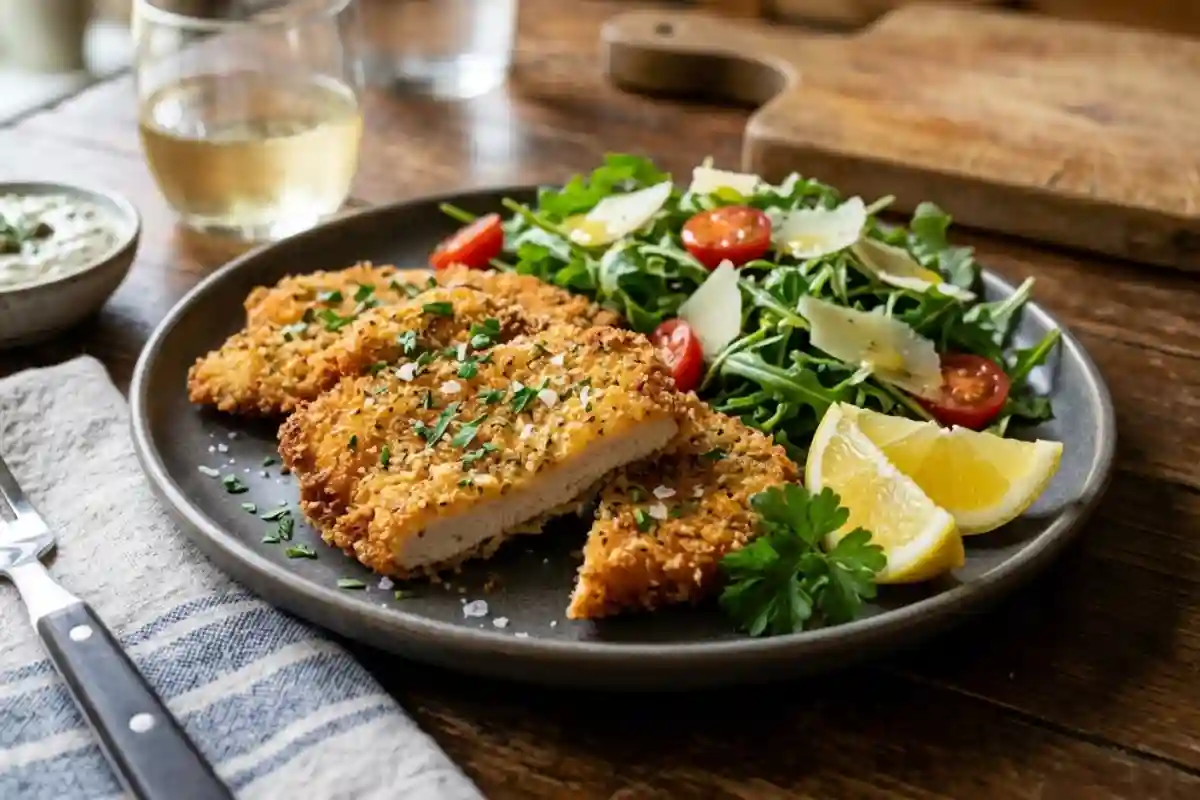
- Garnish and Serve: Arrange all four cutlets on a serving platter and scatter the chopped flat-leaf parsley across the top for a fresh, herbal note. Place lemon wedges along the side of the platter. Squeeze lemon juice over the cutlets just before eating to brighten the rich, savory crust with a clean burst of acidity.
Notes
- Storage: Transfer fully cooled cutlets to an airtight container lined with parchment paper and refrigerate for up to 3 days. Place a sheet of parchment between each cutlet to prevent the crust from softening where the pieces touch.
- Reheating: Arrange refrigerated cutlets on a wire rack set over a rimmed baking sheet. Reheat in an oven preheated to 200°C / 390°F for 8 minutes until the crust is audibly crisp again and the internal temperature returns to 74°C / 165°F. Avoid the microwave entirely, as it steams the crust and makes it soggy.
- Freezing: Freeze fully cooled cutlets in a single layer on a parchment-lined baking sheet for 1 hour until firm, then transfer to a zip-top freezer bag with the air pressed out and freeze for up to 2 months. Reheat directly from frozen on a wire rack in an oven at 200°C / 390°F for 15 minutes, flipping once halfway through.
- Make-Ahead: Bread the cutlets up to 4 hours in advance, place them on a parchment-lined baking sheet, cover loosely with plastic wrap, and refrigerate uncovered for the last 30 minutes to dry the surface slightly. This brief drying period produces a noticeably crisper crust when the cutlets hit the hot oil.
- Substitution: Boneless skinless turkey breast cutlets work well at the exact same thickness, temperature, and timing. Pork loin cutlets are another direct substitute; pound them to the same 0.5cm / 0.2in thickness and fry at 175°C / 350°F for 3 minutes per side until the internal temperature reaches 63°C / 145°F.
- Equipment Note: A 12-inch cast iron or stainless steel skillet retains heat far better than a nonstick pan, which means the oil temperature stays consistent when the cold cutlets are added. If a nonstick pan is the only option, increase the heat slightly to compensate for the drop in temperature.
FAQ
What is the difference between a chicken cutlet and a chicken breast?
A chicken cutlet is a thin, flat piece of chicken that has been either sliced horizontally from a whole chicken breast or pounded to a uniform thickness of roughly 0.5cm to 1cm. A whole chicken breast is significantly thicker, typically 4cm to 5cm at its thickest point, which makes it unsuitable for quick pan-frying because the outside overcooks before the center reaches a safe internal temperature. The pounding process breaks down some of the muscle fibers, giving the cutlet a slightly more tender texture than an unpounded breast cooked to the same internal temperature. In Italian-American cooking, the term cutlet specifically implies the thin format that allows for a fast, high-heat sear with a crispy breaded coating.
How do you keep chicken cutlets from getting soggy after frying?
The single most effective technique is resting the cutlets on a wire rack rather than on a plate or paper towel immediately after frying. A flat plate traps steam underneath the cutlet, which softens the crust within minutes. Paper towels absorb surface oil but also trap steam the same way. The wire rack allows hot air to circulate completely around the cutlet, carrying moisture away from the crust on all sides. A 5-minute rest before breading and a 2-minute rest on the rack after frying both contribute significantly to crust integrity. Serving the cutlets within 10 minutes of frying also makes a noticeable difference in overall texture.
What temperature should the oil be for frying chicken cutlets?
The oil should be at 175°C / 350°F when the cutlets go into the pan. At this temperature, the moisture inside the breading converts to steam immediately, pushing outward through the crust and preventing the oil from soaking in, which is the mechanism behind a light, crispy coating rather than a greasy one. Oil that is too cool, below 160°C / 320°F, absorbs into the breading before the crust sets and produces a heavy, oily texture. Oil that is too hot, above 190°C / 375°F, burns the breadcrumbs to a dark brown before the chicken inside reaches 74°C / 165°F. A drop of breadcrumb in the oil that sizzles steadily without violent spattering is a reliable visual cue that the temperature is correct.
Can you make chicken cutlets in an air fryer?
Chicken cutlets can be cooked in an air fryer, though the result is noticeably different from pan-frying. An air fryer produces a drier, matte crust because the cooking mechanism is circulating hot air rather than immersing the coating in hot oil. To compensate, spray both sides of each breaded cutlet generously with neutral cooking spray before placing them in the basket in a single layer. Cook at 200°C / 390°F for 10 minutes, flipping once at the 5-minute mark, until the internal temperature reads 74°C / 165°F. The air-fryer version has a lighter calorie count and less oil, making it a reasonable option for meal prep, but pan-frying remains the standard method for the characteristic golden, shatteringly crisp crust.
How thin should you pound chicken cutlets?
For the classic breaded cutlet intended for pan-frying, the target thickness is 0.5cm to 0.6cm, which is roughly the thickness of two US quarters stacked together. At this thickness, the cutlet cooks fully in 3 minutes per side in hot oil without drying out. Cutlets intended for dishes like chicken Parmesan or chicken Milanese are often left slightly thicker at around 1cm because they will continue cooking under broiler heat or in tomato sauce. Cutlets thinner than 0.5cm cook so quickly that they tend to become dry before the crust develops full color. Using a piece of plastic wrap over the chicken during pounding prevents the meat from tearing and keeps your cutting board clean.
What do you serve with chicken cutlets?
Chicken cutlets are versatile enough to anchor a wide range of plates. Classic Italian-American pairings include a simple arugula salad dressed with lemon juice and extra-virgin olive oil, which provides bitterness to contrast the richness of the fried crust. Roasted or sauteed broccolini, a warm white bean salad, or creamy mashed potatoes are all common accompaniments in American home cooking. The cutlet also serves as the base for built dishes such as chicken Parmesan, where it is topped with marinara and melted mozzarella, or a chicken cutlet sandwich, where it is layered into a brioche bun with sliced tomato and aioli. A wedge of fresh lemon is always appropriate at the table regardless of the side dish, since the acidity lifts the entire plate.