
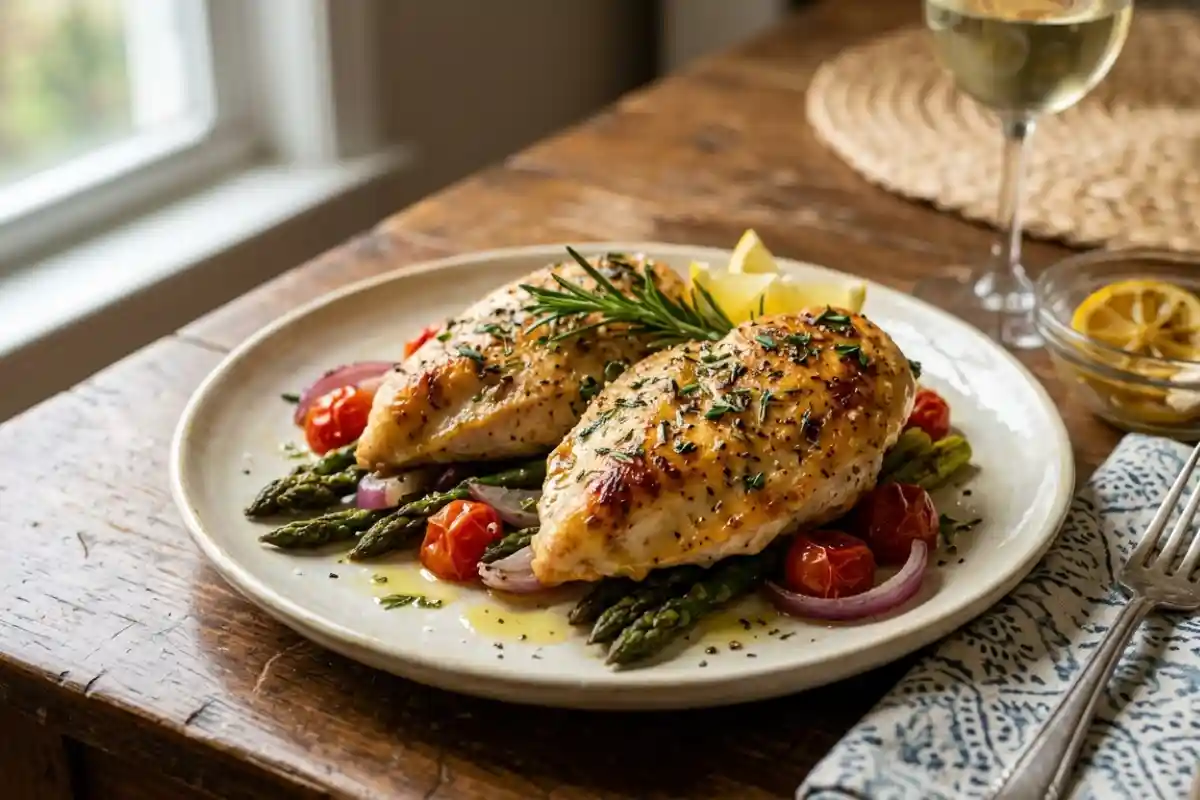
Chicken breast is the lean, boneless cut taken from the pectoral muscle of Gallus gallus domesticus. It is one of the most widely consumed protein sources in the world. A 200g cooked serving delivers approximately 62g of protein and fewer than 6g of fat. The cut suits weeknight dinners, structured meal-prep cycles, and post-training recovery meals. Pan-searing followed by a short oven finish produces a caramelized crust and a moist interior. Internal temperature must reach 74°C (165°F) for safe consumption. Brining the breast in a 5% salt solution for 30 minutes reduces moisture loss during cooking. Chicken breast pairs directly with roasted vegetables, grain bowls, and leafy-green salads. Pounding the breast to an even 2cm thickness ensures uniform doneness across the whole cut.
Ingredients
Equipment
Method
- Brine the Chicken: Dissolve 50g fine sea salt in 1 litre cold water in a mixing bowl, stirring for 60 seconds until fully dissolved. Submerge all four chicken breasts in the brine. Refrigerate uncovered for 30 minutes; the flesh will turn slightly opaque at the edges.
- Pound to Even Thickness: Remove the breasts from the brine and pat each one completely dry with paper towels. Place one breast between two sheets of plastic wrap. Use a meat mallet to pound the thickest end down to a uniform 2cm thickness, which takes approximately 8 firm strikes. Repeat for all four breasts.
- Season the Breasts: Combine garlic powder, smoked paprika, black pepper, onion powder, and dried thyme in a small bowl. Coat each breast evenly on both sides with the spice blend, pressing lightly so the mixture adheres to the surface.
- Preheat the Oven and Skillet: Place the oven rack in the middle position and preheat the oven to 204°C (400°F). Set a cast-iron skillet over high heat on the stovetop for 3 minutes until the pan radiates strong heat and a drop of water evaporates on contact within 1 second.
- Sear the First Side: Add avocado oil to the hot skillet and swirl to coat. Lay two chicken breasts smooth-side down, leaving at least 3cm between them. Sear undisturbed for 3 minutes at high heat until a deep golden-brown crust releases cleanly from the pan surface. Repeat with the remaining two breasts, then return all four to the pan.
- Sear the Second Side and Add Butter: Flip each breast using tongs. Add 1 tablespoon butter to the pan. Tilt the skillet slightly and use a spoon to baste each breast with the melted butter continuously for 1 minute; the butter should foam actively and smell nutty.
- Finish in the Oven: Transfer the skillet directly into the preheated 204°C (400°F) oven. Roast for 10 minutes until an instant-read thermometer inserted into the thickest part of the breast reads exactly 74°C (165°F). Remove the skillet from the oven immediately.
- Rest Before Slicing: Transfer the breasts to a wire rack set over a baking sheet. Tent loosely with aluminum foil. Rest for 5 minutes; internal temperature will carry over to approximately 76°C (169°F) and juices will redistribute throughout the meat. Slice against the grain and serve.
Notes
FAQ
What is chicken breast?
Chicken breast is the boneless, skinless cut taken from the pectoral muscle on the underside of a chicken. It is a lean white meat with a mild flavour, low intramuscular fat content, and a dense protein structure that makes it a primary protein source in high-protein and low-fat dietary plans worldwide.
What cooking method produces the juiciest chicken breast?
The pan-sear-to-oven method produces the juiciest result. Searing at high heat on the stovetop builds a Maillard-reaction crust that seals surface moisture, while finishing in a 204°C (400°F) oven ensures even internal heat penetration without overcooking the exterior. Brining in a 5% salt solution for 30 minutes before cooking further reduces moisture loss by approximately 15-20% compared to unbrined breast.
At what internal temperature is chicken breast safe to eat?
The USDA and equivalent food safety authorities require poultry to reach a minimum internal temperature of 74°C (165°F) measured at the thickest point using a calibrated instant-read thermometer. Carryover cooking will raise the temperature an additional 2-3°C after the breast is removed from heat, so pulling it at 72-73°C is acceptable only when a 5-minute rest is guaranteed.
How long does cooked chicken breast keep in the refrigerator?
Cooked chicken breast keeps safely in the refrigerator for up to 4 days when stored in an airtight container at or below 4°C (40°F). Slicing the breast before refrigerating accelerates cooling and reduces the time the meat spends in the bacterial growth temperature zone of 4°C-60°C (40°F-140°F).
Can turkey breast substitute for chicken breast in this recipe?
Turkey breast cutlets substitute at a 1:1 weight ratio. Turkey breast is slightly denser and has a lower intramuscular fat content than chicken breast. Increase the oven finish time to 14-16 minutes and verify a minimum internal temperature of 74°C (165°F) at the thickest point. All seasoning quantities remain unchanged.
Is chicken breast suitable for keto and gluten-free diets?
Chicken breast contains zero carbohydrates and zero gluten in its natural state, making it fully compatible with both ketogenic and gluten-free dietary frameworks. This recipe uses only naturally gluten-free seasonings and avocado oil. Individuals following halal dietary guidelines should verify that the butter used carries halal certification or substitute with ghee from a certified halal source.