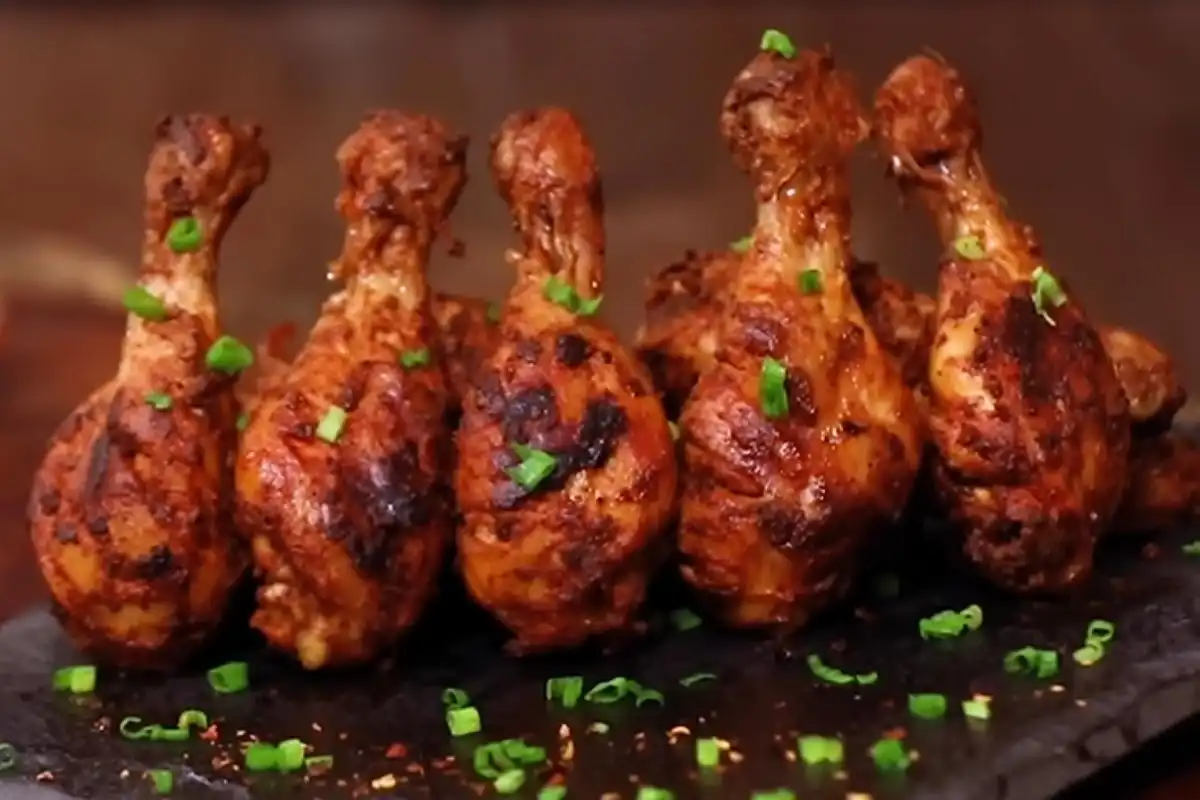

Chicken Adobo is a Filipino braised chicken dish cooked in a reduction of vinegar, soy sauce, garlic, and bay leaves. The braising method slowly tenderizes the chicken while concentrating the cooking liquid into a glossy, savory sauce. Filipino cuisine treats this dish as a foundational household staple, present in nearly every region of the archipelago in some variation.
One serving of Chicken Adobo provides approximately 38 grams of protein and 310 calories. The dish qualifies for high-protein dietary frameworks and is naturally gluten-free when tamari replaces standard soy sauce. Chicken Adobo suits weeknight dinners, family meals, and meal prep cooking, as the flavor deepens significantly after 24 hours of refrigeration. Home cooks and batch cookers both rely on it for its low active cooking time and long refrigerator shelf life.
Chicken Adobo shares a close relationship with Chicken Tinola, another Filipino chicken dish that uses ginger broth rather than an acid-based braising liquid. This recipe uses bone-in, skin-on chicken thighs, which release collagen into the braising sauce during cooking, giving the finished sauce its characteristic body and richness.
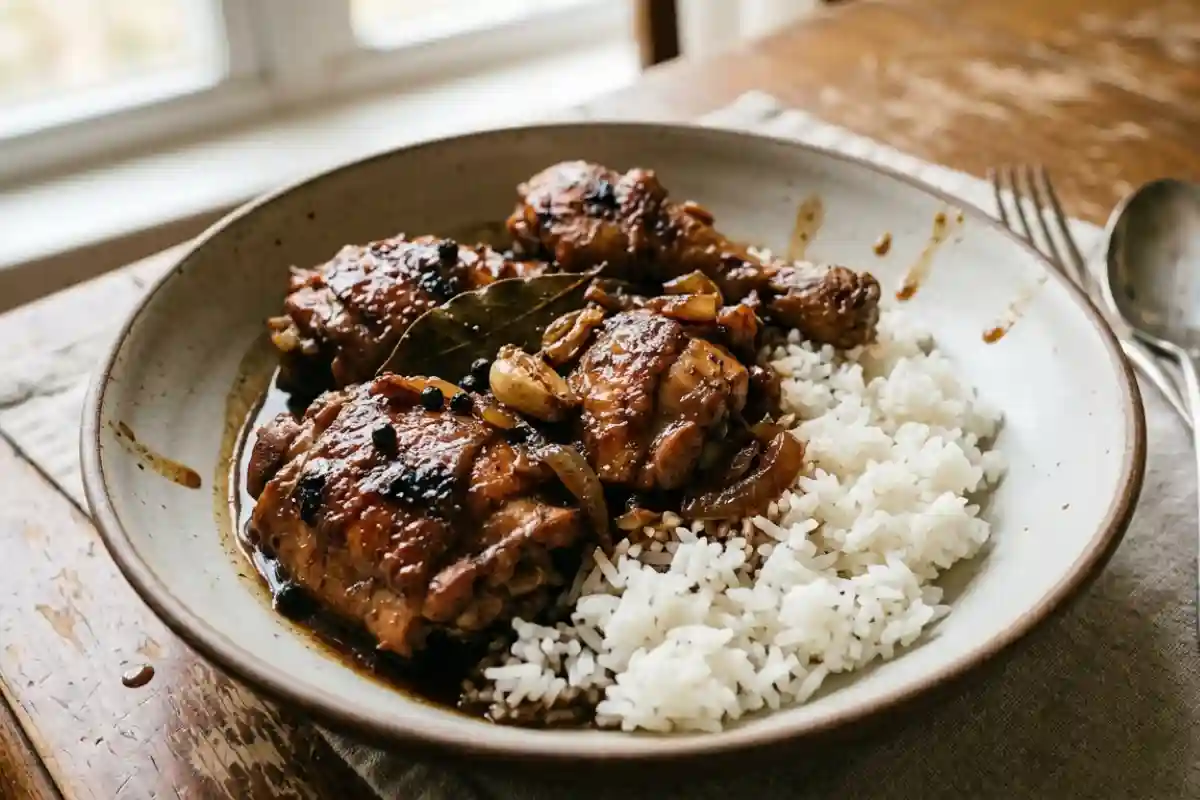
Chicken Adobo Recipe
Ingredients
Equipment
Method
- Pat and Season the Chicken: Place the 4 chicken thighs on a cutting board and pat each piece thoroughly dry with paper towels, pressing firmly on both the skin side and the underside. Removing surface moisture from the skin is a critical step: dry skin makes direct contact with the hot pan surface, which drives the Maillard reaction and produces deep browning rather than steaming. Set the dried thighs aside on the cutting board while the pan heats.
- Sear the Chicken Thighs: Heat 1 tablespoon of neutral cooking oil in a 12-inch heavy-bottomed skillet over medium-high heat for 2 minutes until the oil shimmers and moves freely across the pan surface. Place the chicken thighs skin-side down in the pan, pressing each one flat with tongs to maximize skin contact, and sear for 5 minutes without moving them until the skin is deep golden brown and pulls away from the pan cleanly.
- Flip and Sear the Underside: Flip each chicken thigh using tongs and sear the underside for 3 minutes until the flesh side is opaque and lightly browned. Transfer the seared thighs to a plate and set aside. Do not discard the rendered fat left in the pan, as it forms the flavor base for the braising liquid.
- Build the Braising Liquid: With the skillet still over medium heat, add the crushed garlic cloves directly to the rendered fat and cook for 1 minute, stirring with a wooden spoon, until the garlic is fragrant and lightly golden at the edges. Pour in the 80ml / 1/3 cup of white cane vinegar, 60ml / 1/4 cup of soy sauce, and 120ml / 1/2 cup of water. Add the 3 bay leaves and 1 teaspoon of whole black peppercorns. Stir once to combine all ingredients.
- Return Chicken and Braise: Nestle the seared chicken thighs back into the skillet skin-side up, ensuring each piece sits partially submerged in the braising liquid. Bring the liquid to a full boil over medium-high heat, then immediately reduce the heat to medium-low and cover the skillet with a tight-fitting lid. Braise for 20 minutes until the chicken is fully cooked through, the meat pulls slightly away from the bone at the joint, and an instant-read thermometer inserted at the thickest part reads 74°C / 165°F.
- Reduce the Sauce: Remove the lid and increase the heat to medium-high. Cook uncovered for 10 minutes, turning the chicken thighs once at the 5-minute mark, until the braising liquid reduces by approximately half and coats the back of a spoon in a thin, glossy layer. If using sugar, stir in 1 teaspoon during the final 2 minutes of reduction. Remove and discard the bay leaves before serving.
Notes
- Storage: Transfer cooled Chicken Adobo along with all of the braising sauce into an airtight container and refrigerate for up to 4 days. The braising liquid acts as a natural preservative due to its vinegar content, and the flavor intensifies noticeably after the first 24 hours.
- Reheating: Place refrigerated Chicken Adobo in a skillet over medium heat with 2 tablespoons of water added to the sauce. Cover and heat for 8 minutes, turning the chicken once at the 4-minute mark, until the internal temperature returns to 74°C / 165°F and the sauce is bubbling.
- Make-Ahead: Chicken Adobo is one of the few braised chicken dishes that tastes noticeably better when made 1 day in advance. Cook the full recipe, cool it to room temperature within 1 hour, then refrigerate overnight. The acidity of the vinegar continues to tenderize the meat and the garlic flavor permeates the entire dish during resting.
- Substitution: Bone-in chicken drumsticks work with the same braising time and temperature. Boneless, skinless chicken thighs also work but require a reduced braise time of 15 minutes covered at medium-low heat, followed by a 5-minute uncovered reduction, with an internal target of 74°C / 165°F. Skip the initial sear on boneless thighs if time is limited.
- Freezing: Freeze fully cooked Chicken Adobo with its braising sauce in a freezer-safe container for up to 3 months. Thaw overnight in the refrigerator. Reheat in a covered skillet over medium-low heat for 12 minutes until the sauce is bubbling and the internal temperature reaches 74°C / 165°F.
- Vinegar Selection: White cane vinegar is the traditional choice in Filipino cooking and produces a clean, sharp acidity. Distilled white vinegar delivers a slightly harsher flavor. Coconut vinegar adds a mild, fruity note that suits the dish well. Avoid balsamic or red wine vinegar, as their sweetness disrupts the balance of the sauce.
FAQs
What is Chicken Adobo?
Chicken Adobo is a Filipino braised chicken dish cooked in a mixture of vinegar, soy sauce, garlic, bay leaves, and black peppercorns. The word adobo refers to the cooking method of preserving and flavoring meat in an acid-based marinade or braising liquid, not a single sauce. Filipino Chicken Adobo differs from Spanish adobo, which uses a dry spice rub. The dish appears in regional variations throughout the Philippines, with some versions using coconut milk and others using a dry adobo finish where the sauce reduces completely.
Why does Chicken Adobo taste better the next day?
The acidity of the vinegar continues to work on the muscle fibers of the chicken after the heat is off, further tenderizing the meat during refrigeration. The garlic flavor also continues to infuse into the braising sauce overnight, making each component more unified. Most Filipino cooks intentionally prepare Chicken Adobo a day ahead for this reason. Reheating the chilled dish also re-emulsifies the fat and sauce into a more cohesive, glossy coating.
What type of vinegar is used in Chicken Adobo?
Traditional Filipino Chicken Adobo uses white cane vinegar, which is made from fermented sugarcane juice. White cane vinegar has a mild, clean acidity that does not overpower the soy sauce or garlic in the braising liquid. Coconut vinegar is a common regional alternative and adds a slight earthiness. Distilled white vinegar is a widely available substitute that produces a sharper but acceptable result.
Can you make Chicken Adobo without soy sauce?
Chicken Adobo prepared without soy sauce is called Adobong Puti, or white adobo, a regional variant common in parts of the Visayas and Pampanga. In white adobo, the soy sauce is replaced entirely with additional vinegar and salt, producing a paler, tangier dish. For a gluten-free version of the standard recipe, tamari serves as a direct one-to-one replacement for soy sauce with no adjustment to the braising time or liquid ratio.
What do you serve with Chicken Adobo?
Steamed white rice is the most traditional pairing for Chicken Adobo, as the starchy, neutral rice absorbs the braising sauce directly. Garlic fried rice, known as sinangag, is a common alternative and appears frequently in Filipino meal prep and breakfast contexts. For a lower-carbohydrate option, cauliflower rice works well. A simple side of blanched bok choy or sauteed morning glory balances the richness of the braised chicken.
Is Chicken Adobo gluten-free?
Standard Chicken Adobo is not gluten-free because most commercial soy sauce contains wheat. The dish becomes fully gluten-free by substituting tamari, which is a Japanese-style soy sauce brewed without wheat, at the same volume. All other core ingredients in Chicken Adobo, including vinegar, garlic, bay leaves, and black peppercorns, are naturally gluten-free. Always verify that the tamari label explicitly states gluten-free if cross-contamination is a concern.
Can you make Chicken Adobo in a slow cooker?
Chicken Adobo adapts well to slow cooking, though the sauce will not reduce on its own in a slow cooker. Combine all braising liquid ingredients in the slow cooker insert, add the chicken, and cook on low for 6 hours until the internal temperature reaches 74°C / 165°F. After slow cooking, transfer the braising liquid to a saucepan and boil over medium-high heat for 10 minutes to reduce it to a sauce consistency before pouring it back over the chicken.
How do you know when Chicken Adobo is done braising?
Chicken Adobo is fully cooked when an instant-read thermometer inserted into the thickest part of the thigh, away from the bone, reads 74°C / 165°F. Visual cues include meat that pulls slightly away from the bone at the joint and juices that run clear rather than pink when the thigh is pierced. The braising liquid is correctly reduced when it coats the back of a spoon in a thin, even layer and has darkened in color from the initial mixture.