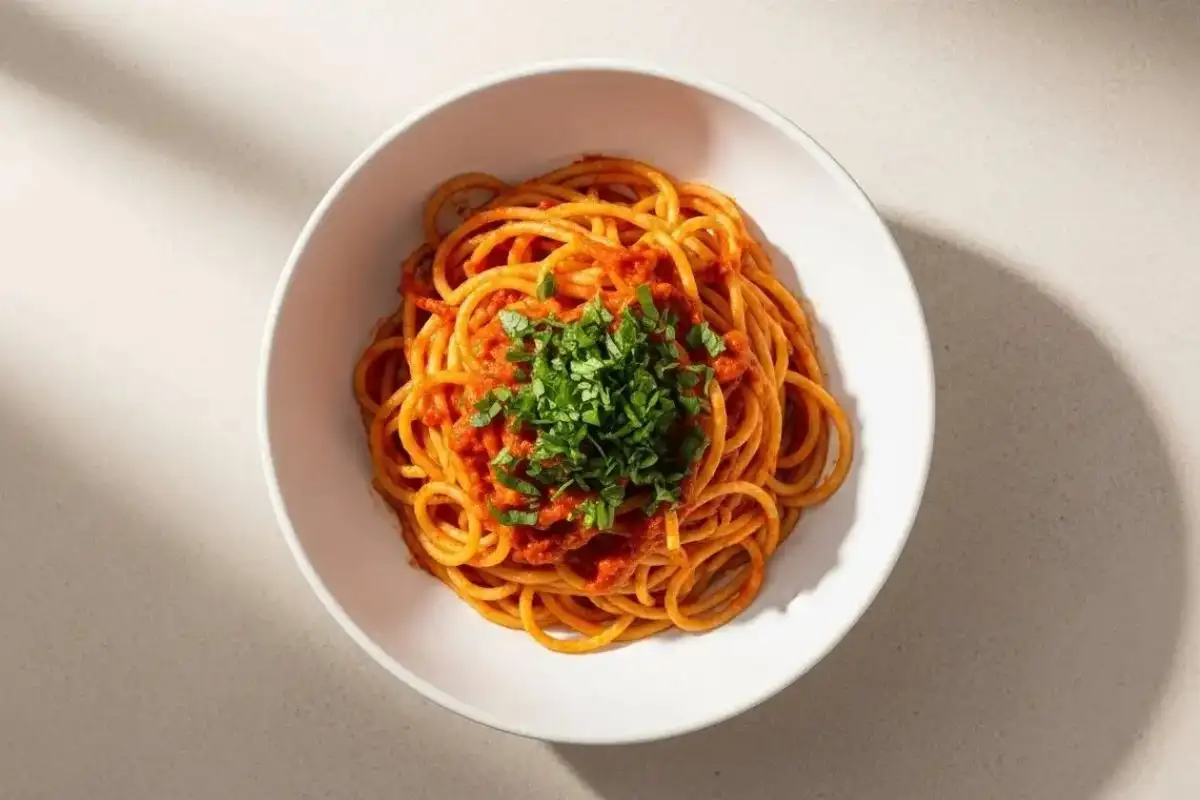

Amatriciana is one of Rome’s four classic pastas, and the one with the most flavor per ingredient. Guanciale crisps in its own fat, tomato and chili go in, and Pecorino Romano finishes it. Bucatini is the traditional match, since the hollow tubes hold the sauce. It takes 30 minutes, and there is no onion, no garlic and no cream in sight.
The one thing to get right is the guanciale. Render it slowly until the edges crisp and the fat turns golden, then use that fat to build the sauce. That pork fat is the whole flavor of the dish. Everything below walks you through it.
Prep: 10 minutes | Cook: 20 minutes | Total: 30 minutes | Servings: 4 | About 560 kcal per serving
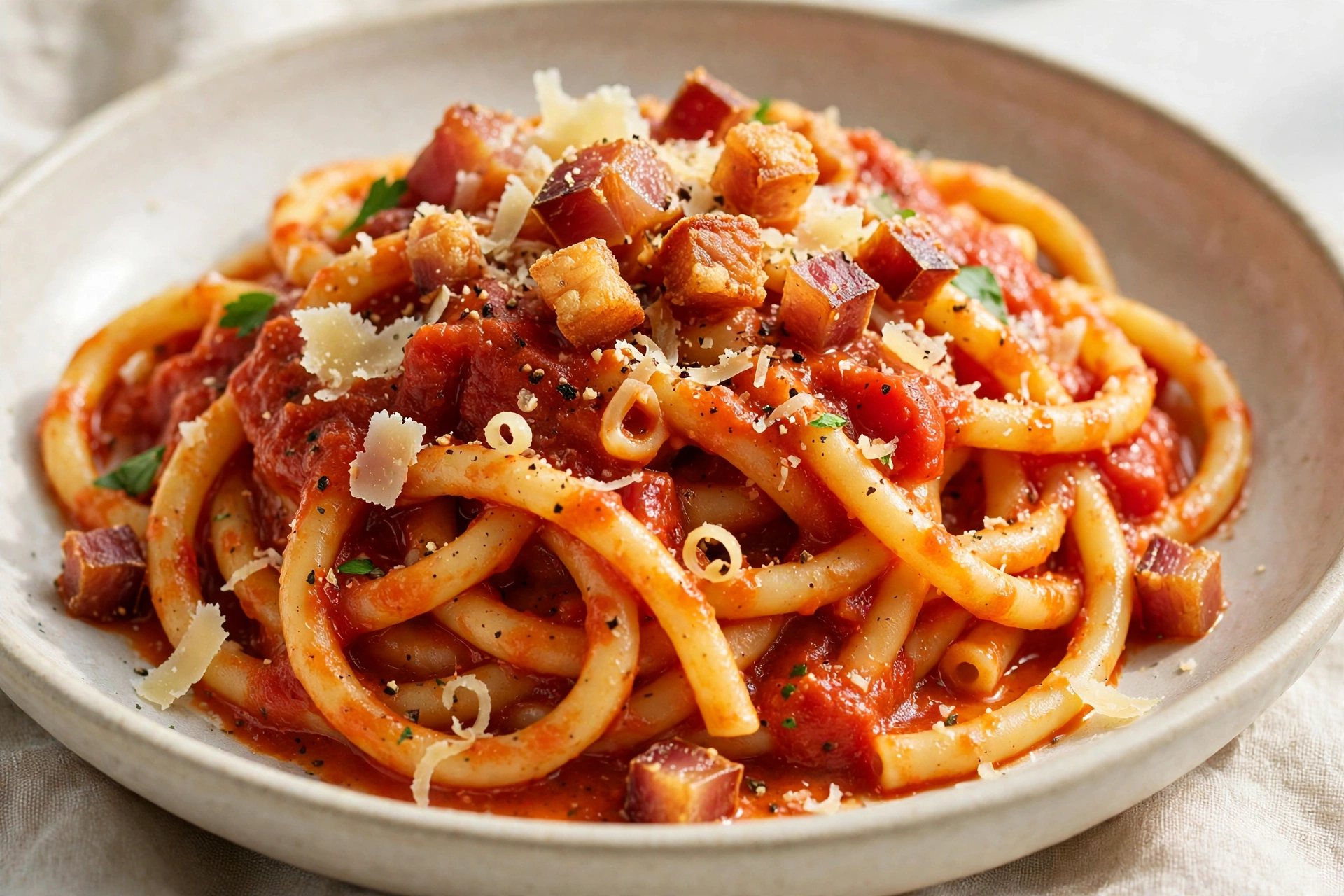
Amatriciana Recipe
Amatriciana is a Roman pasta sauce made with guanciale, tomato, chili and Pecorino Romano, tossed with bucatini. It comes from Amatrice, a town northeast of Rome.
Ingredients
| Ingredient | Amount |
|---|---|
| Bucatini | 1 lb |
| Guanciale, diced | 6 oz |
| Pecorino Romano, finely grated | 1 cup |
| Crushed tomatoes | 1 can (28 oz) |
| Dry white wine | 1/2 cup |
| Red pepper flakes | 1/2 tsp |
| Black pepper | 1/2 tsp |
| Kosher salt | 1/2 tsp |
Equipment
- Large pot
- Large skillet
- Tongs
- Colander
Method
- Crisp the guanciale: Put the diced guanciale in a cold large skillet, then set it over medium heat. Cook for 8 to 10 minutes, stirring now and then, until the edges crisp and the fat turns golden. Remove the guanciale with a slotted spoon and leave the fat in the pan.
- Deglaze with wine: Pour the white wine into the hot fat and scrape the bottom of the pan. Let it bubble for 1 minute until the sharp smell cooks off.
- Simmer the sauce: Add the crushed tomatoes and red pepper flakes and simmer for 12 to 15 minutes until the sauce thickens. Season lightly with salt, keeping in mind that the guanciale and cheese are already salty.
- Boil the bucatini: While the sauce simmers, cook the bucatini in a large pot of salted water until just shy of al dente. Reserve 1 cup of pasta water, then drain.
- Toss it together: Add the drained bucatini and the crisp guanciale to the skillet and toss, adding pasta water a splash at a time until the sauce coats every strand.
- Finish with cheese: Take the pan off the heat and toss in the Pecorino Romano and black pepper. Serve right away with extra Pecorino on top.
Notes
- Guanciale vs pancetta: guanciale is cured pork cheek, and its fat is softer and richer than pancetta. Pancetta is the closest swap if you cannot find guanciale. Bacon is a last resort, since it tastes smoky.
- No onion, no garlic: the classic Amatrice version has neither. The guanciale, tomato and chili carry the whole sauce.
- Salt: go light. Guanciale and Pecorino are both salty, so taste the sauce before adding more salt.
What is guanciale?
Guanciale is cured pork cheek, a Roman staple. It has a high fat content that renders into golden fat and crisps at the edges. Find it at Italian delis or butchers.
Can I use pancetta instead of guanciale?
Yes, pancetta is the closest substitute. It is a little leaner, so add a splash of olive oil to the pan to make up for the missing fat.
Bucatini or spaghetti?
Bucatini is traditional, and the hollow center holds the sauce. Spaghetti works well too, and it is easier to find.
Is amatriciana spicy?
It has a gentle warmth from the chili flakes, not real heat. Use 1 teaspoon if you like it bolder, or leave the flakes out for a mild version.
Serve with a green salad and a glass of red wine. Keep the sides simple, the pasta is the whole point.