
Cacio e pepe is three ingredients and a technique. Pecorino Romano, black pepper and pasta, plus the starchy water they cook in, turn into a sauce so silky it looks like it has cream in it. It takes 20 minutes, and most of that is waiting for the water to boil. This is one of Rome’s four classic pastas, and the simplest of them all.
The one thing to get right is the cheese. Grate it finely, mix it with a little warm pasta water into a smooth paste before it meets the pasta, and keep the pan off the heat. That is what keeps the sauce creamy instead of clumpy. Everything below walks you through it.
Prep: 5 minutes | Cook: 12 minutes | Total: 20 minutes | Servings: 4 | About 480 kcal per serving
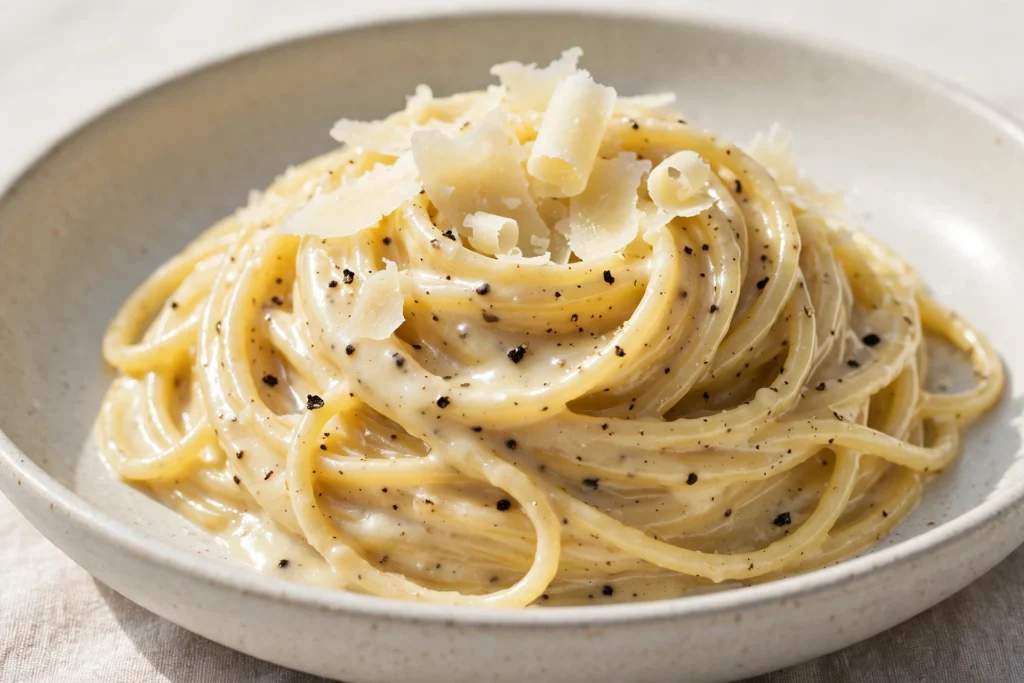
Cacio e Pepe Recipe
Cacio e pepe is a Roman pasta made with Pecorino Romano, black pepper and spaghetti. The cheese and starchy pasta water emulsify into a creamy sauce with no cream at all.
Ingredients
| Ingredient | Amount |
|---|---|
| Spaghetti or tonnarelli | 1 lb |
| Pecorino Romano, finely grated | 2 cups |
| Black pepper, coarsely ground | 2 tbsp |
| Kosher salt, for the pasta water | 1 tsp |
| To serve | Extra Pecorino Romano and black pepper |
Equipment
- Large pot
- Large skillet
- Tongs
- Small bowl
- Colander
Method
- Toast the pepper: Put the black pepper in a large dry skillet over medium heat and toast for 1 minute until fragrant. Toasting wakes up the pepper, so do not skip it.
- Boil the pasta: Bring a large pot of water to a boil and salt it lightly. Cook the spaghetti until just shy of al dente, about 1 minute less than the package says. Use less water than usual, so it turns extra starchy.
- Make the cheese paste: While the pasta cooks, put the grated Pecorino in a small bowl and stir in 3 tablespoons of warm pasta water until it turns into a smooth, thick paste. This step is what keeps the sauce from clumping.
- Reserve the water: Before draining, scoop out 1 cup of pasta water. This starchy water is the sauce, so do not pour it away.
- Toss it together: Drain the pasta and add it to the skillet with the toasted pepper. Take the pan off the heat, add the cheese paste, and toss fast, adding pasta water a splash at a time until the sauce turns glossy and coats every strand.
- Serve right away: Plate immediately with extra Pecorino and black pepper on top. Cacio e pepe thickens as it sits, so do not wait.
Notes
- Clumps: if the sauce clumps, the pan was too hot or the cheese went in dry. Take the pan off the heat, add a splash of pasta water, and toss until it smooths out.
- Pecorino, not Parmesan: Pecorino Romano is sharper and saltier than Parmesan, and it melts into a creamier sauce. Parmesan works in a pinch but tastes milder.
- Salt: go light on the pasta water salt, since Pecorino is already salty. Taste before adding more.
Why is my cacio e pepe sauce clumpy?
The cheese hit a pan that was too hot, or it went in without water. Keep the pan off the heat, mix the cheese with warm pasta water into a paste first, and toss with splashes of water until smooth.
Can I use Parmesan instead of Pecorino Romano?
You can, but the flavor changes. Pecorino is sharper, saltier and melts creamier. If you use Parmesan, add a little extra black pepper to make up for it.
Which pasta shape works best?
Spaghetti and tonnarelli are the traditional choices. Long shapes work best, since the sauce clings to them. Short shapes like penne do not hold the sauce as well.
Can I add butter or cream?
You can add a small knob of butter for richness, but cream is not part of this dish. The sauce is already creamy from the cheese and pasta water.
Serve with a bitter green salad and a glass of white wine. Keep the sides simple, the pasta is the whole point.