
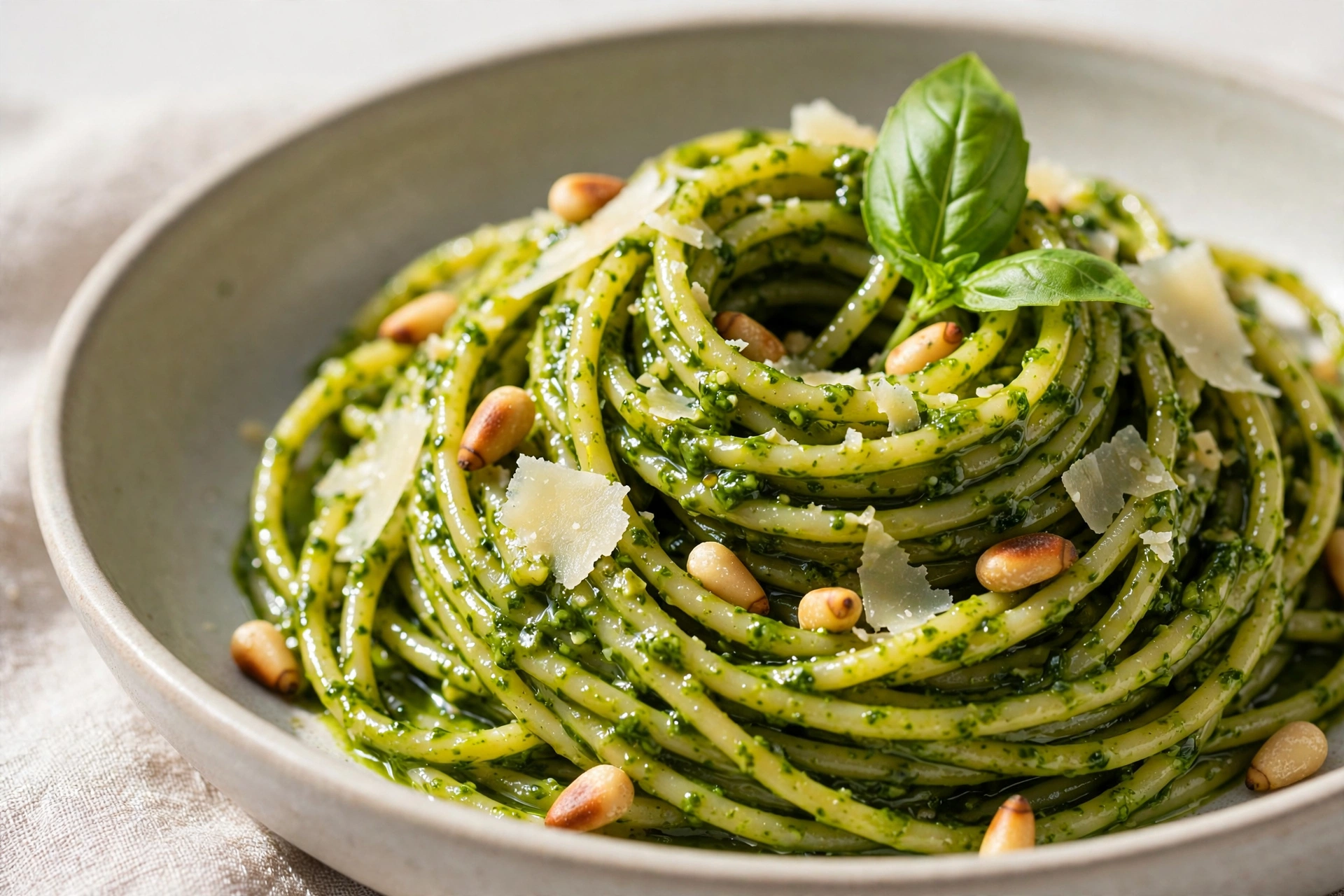
Real pesto Genovese has no cream, no cooking and no shortcuts. It is fresh basil pounded with pine nuts, garlic, Parmesan and olive oil into a bright green sauce that coats pasta in seconds. This version takes 25 minutes, most of it picking basil leaves, and it tastes nothing like the jarred kind.
The one thing to get right is the basil. Use young, tender leaves and keep them cool, since heat and bruising turn them dark and bitter. A food processor is fine if you pulse gently, but a mortar and pestle gives the smoothest sauce. Either way, work fast and keep the pesto cold.
Prep: 15 minutes | Cook: 10 minutes | Total: 25 minutes | Servings: 4 | About 550 kcal per serving
Pesto Genovese Recipe
Pesto Genovese is a basil sauce from Liguria, made by crushing basil, pine nuts, garlic, Parmesan and olive oil into a smooth paste. It is traditionally tossed with trofie or trenette pasta.
Ingredients
| Ingredient | Amount |
|---|---|
| Fresh basil leaves | 2 cups, packed |
| Pine nuts | 1/3 cup |
| Garlic | 2 cloves |
| Parmesan, finely grated | 1/2 cup |
| Pecorino Romano, finely grated | 2 tbsp |
| Extra virgin olive oil | 1/2 cup |
| Kosher salt | 1/2 tsp |
| Trofie or spaghetti | 1 lb |
| To serve | Extra Parmesan and pine nuts |
Equipment
- Food processor or mortar and pestle
- Large pot
- Colander
- Tongs
- Small skillet
Method
- Toast the pine nuts: Put the pine nuts in a small dry skillet over medium heat and toast for 2 to 3 minutes, shaking the pan, until golden and fragrant. Watch them closely, since they go from golden to burnt in seconds. Set aside to cool.
- Boil the pasta: Bring a large pot of salted water to a boil and cook the trofie or spaghetti until al dente. Reserve 1 cup of pasta water, then drain. The starchy water loosens the pesto later.
- Crush the garlic and salt: Put the garlic and salt in a food processor or mortar and pulse or pound until smooth. The salt acts as an abrasive and helps break the garlic down.
- Add the basil: Add the basil leaves a handful at a time and pulse gently, scraping down the sides, until the leaves break down into a paste. Do not run the processor nonstop, since the heat darkens the basil.
- Add the nuts and cheese: Add the cooled pine nuts, Parmesan and Pecorino and pulse a few times until combined. The sauce should be thick and slightly coarse, not completely smooth.
- Stream in the oil: With the processor running on low, or while stirring by hand, drizzle in the olive oil until the pesto turns glossy and spoonable. Taste and add more salt if needed.
- Toss with the pasta: Put the drained pasta in a large bowl, add the pesto and toss, adding pasta water a splash at a time until the sauce coats every strand. Serve with extra Parmesan and pine nuts.
Notes
- Storage: keeps 1 week in the fridge under a thin layer of olive oil, or 3 months in the freezer. The oil layer keeps the basil green.
- No food processor: a mortar and pestle is the traditional tool and gives the best texture. It takes about 10 minutes of pounding.
- Pasta water: always reserve a cup before draining. It is what turns thick pesto into a sauce that coats the pasta.
What pasta goes best with pesto Genovese?
Trofie is the traditional match from Liguria, since the twists catch the sauce. Spaghetti and trenette work well too. Avoid shapes with big hollows, which the sauce cannot reach.
Can I make pesto ahead of time?
Yes. It keeps a week in the fridge if you press a thin layer of olive oil on top to keep air out, and it freezes well for up to 3 months. Thaw in the fridge and stir before using.
Why did my pesto turn dark?
Basil darkens when it gets hot or sits in air. Pulse gently instead of blending nonstop, keep the sauce cold, and cover it with oil when storing. A little lemon juice helps, but it changes the flavor, so use it only if needed.
Can I use other nuts instead of pine nuts?
Walnuts are the closest swap and are traditional in some parts of Liguria. Almonds work too but taste sweeter. Avoid peanuts, which overpower the basil.
Serve with a tomato salad and crusty bread. The bread is for the pesto left in the bowl.