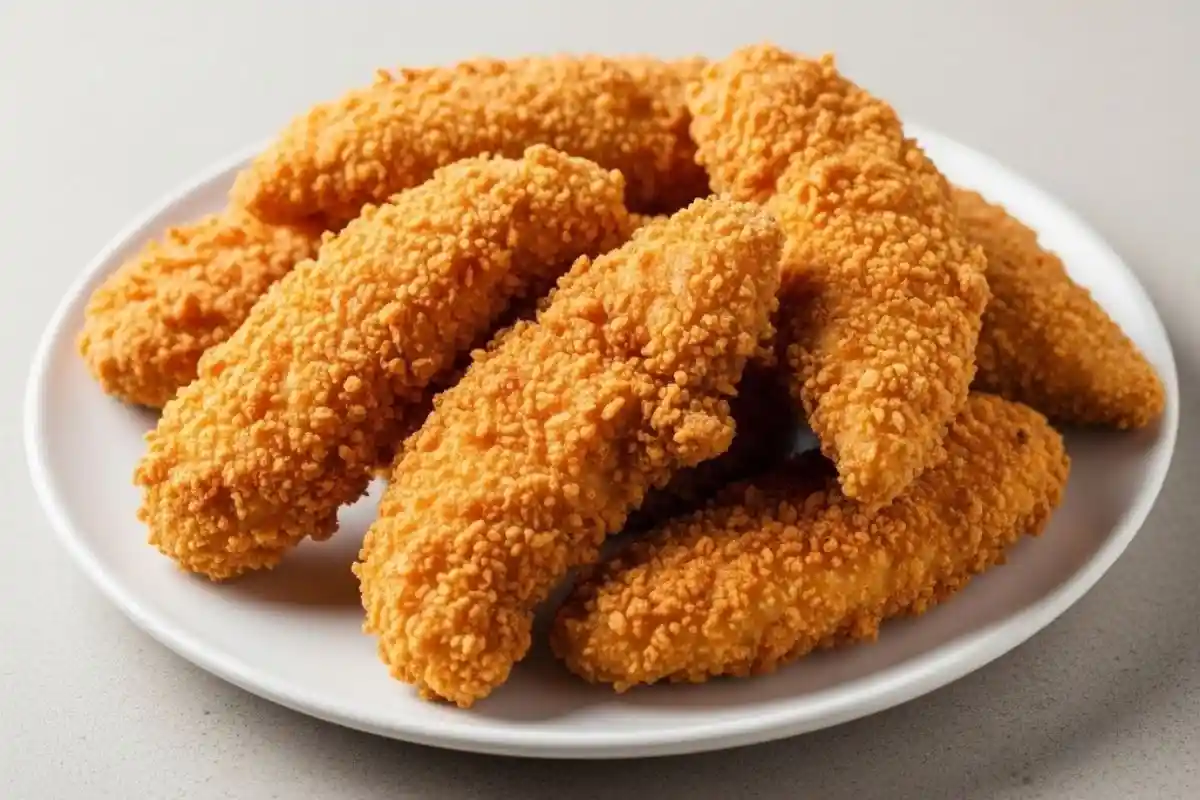

Chicken tenders are strips of boneless chicken breast or the tenderloin muscle that run along the underside of a whole chicken breast. They are breaded and cooked using dry heat, most commonly oven baking or air frying, to produce a crisp golden exterior with a juicy interior. This American comfort food staple appears on restaurant menus and home dinner tables across the country in countless variations.
A single serving of four tenders delivers roughly 38 grams of protein at approximately 290 calories, making this a high-protein option that fits naturally into weeknight meal planning and family dinners. The recipe is easy to adapt for gluten-free diets by swapping standard breadcrumbs for a certified gluten-free panko variety. Whether you are feeding young children after school or building a meal-prep batch for the week, chicken tenders are reliably crowd-pleasing and quick to prepare.
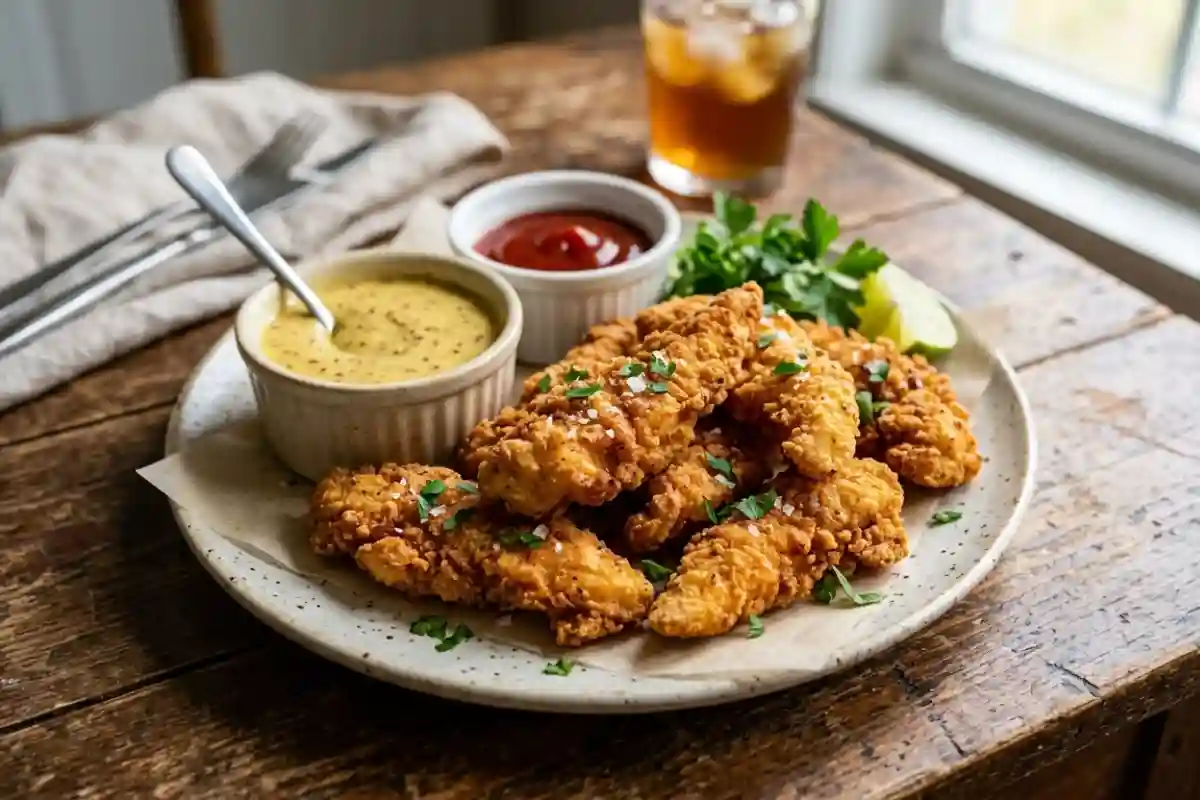
For a complete plate, pair these tenders with a simple honey mustard dipping sauce or serve them alongside roasted vegetables for a balanced, satisfying meal.
Chicken Tenders
Ingredients
Equipment
Method
- Set the oven to 220°C (425°F) and allow it to fully preheat for 15 minutes. Place a wire rack inside a rimmed baking sheet and coat the rack lightly with cooking spray to prevent sticking.
- Arrange three shallow bowls in a row. Add the flour to the first bowl. Whisk the eggs and milk together in the second bowl until fully combined and pale yellow. Combine the panko, garlic powder, onion powder, smoked paprika, salt, black pepper, and dried oregano in the third bowl and stir until the spices are evenly distributed throughout the breadcrumbs.
- Place the chicken tenderloins on a clean cutting board and pat them thoroughly dry with paper towels. Removing surface moisture is essential for the coating to adhere properly and for the exterior to crisp rather than steam during baking.
- Working one tender at a time, dredge the chicken in the flour and shake off any excess. Dip it into the egg mixture, letting the excess drip back into the bowl, then press it firmly into the seasoned panko on both sides so the crumbs adhere in an even, thick layer. Set each coated tender on the prepared wire rack.
- Drizzle the breaded tenders evenly with the neutral oil, or mist them lightly with additional cooking spray. Bake at 220°C (425°F) for 18 minutes, until the coating is deep golden brown and the surface feels firm and crisp when lightly pressed with tongs.
- Use an instant-read thermometer to check the thickest part of each tender. The internal temperature must reach 165°F (74°C). Remove the pan from the oven and let the tenders rest on the rack for 3 minutes before serving, allowing the juices to settle and the crust to maintain its crunch.
Notes
- Storage: Refrigerate leftovers in a single layer in an airtight container for up to 4 days.
- Reheat in a 200°C (400°F) oven for 8 minutes to restore crispness.
- Freezing: Arrange cooled tenders in a single layer on a parchment-lined baking sheet and freeze for 1 hour, then transfer to a zip-top freezer bag. Reheat from frozen at 200°C (400°F) for 14 minutes.
- Make-ahead: Bread the tenders up to 12 hours in advance, cover the rack loosely with plastic wrap, and refrigerate. Bake directly from the refrigerator, adding 2 minutes to the cook time.
- Gluten-free: Use rice flour in place of all-purpose flour and certified gluten-free panko breadcrumbs. All other steps remain the same.
- Spice variation: Add 1/2 tsp cayenne pepper to the panko mixture for a lightly spiced version.
FAQ
What are Chicken Tenders?
Chicken tenders are strips of boneless chicken cut from the tenderloin, a thin muscle that runs along the underside of the chicken breast, or from the breast itself sliced into uniform pieces. They are coated in a seasoned breadcrumb mixture and cooked at high heat to create a crispy exterior around a juicy, fully cooked interior. The cut is naturally tender because the tenderloin muscle does very little physical work during the bird’s life, which means the meat requires minimal cook time compared to denser cuts. In American cuisine, chicken tenders are a foundational comfort food served everywhere from casual diners to home kitchens.
How do you bread chicken tenders so the coating stays on?
The key to a coating that holds is a proper three-stage breading process: flour first, then egg wash, then seasoned breadcrumbs. The flour layer creates a dry, rough surface that gives the egg something to grip, and the egg in turn acts as the glue that binds the breadcrumbs to the chicken. Pressing the panko firmly onto the surface rather than simply rolling the chicken through the crumbs ensures full, even contact. Patting the chicken completely dry before breading is equally important, because any surface moisture will prevent the flour from adhering correctly.
What internal temperature should chicken tenders reach?
Chicken tenders must reach an internal temperature of 165°F (74°C) at the thickest point to be safe to eat, as established by the USDA’s food safety guidelines for poultry. Use an instant-read thermometer such as a Thermapen or any calibrated probe thermometer, inserting it into the center of the thickest tender on the pan. Because tenders are thin, they cook quickly, so checking the temperature at the 18-minute mark prevents both undercooking and overcooking. Overcooked chicken breast meat dries out rapidly, making accurate temperature monitoring the single most effective way to guarantee a juicy result.
How long do Chicken Tenders keep, and can you freeze them?
Refrigerated in an airtight container, cooked chicken tenders keep for up to 4 days. To preserve the crispy coating during reheating, use an oven or air fryer at 200°C (400°F) for 8 minutes rather than a microwave, which softens the crust. For longer storage, freeze the fully cooked and cooled tenders in a single layer before transferring to a sealed freezer bag; they will keep for up to 2 months. Reheat frozen tenders directly from the freezer in a 200°C (400°F) oven for 14 minutes, flipping once at the halfway point for even browning.
What can I substitute for panko breadcrumbs in this recipe?
Panko breadcrumbs can be replaced with regular fine breadcrumbs, though the texture will be slightly less airy and crisp because panko’s larger, flaked structure traps more air during baking. For a gluten-free version, certified gluten-free panko from brands such as Ian’s Natural Foods or 4C produces results that are nearly identical in texture and crunch to standard panko. Crushed cornflakes or crushed rice crackers also work as gluten-free alternatives and contribute a notably crisp, golden coating. If using crushed crackers, reduce the added salt in the recipe by half to avoid overseasoning.
What do you serve with Chicken Tenders?
Chicken tenders pair naturally with a range of dipping sauces, including honey mustard, ranch dressing, barbecue sauce, and buffalo sauce. For a full meal, serve them alongside roasted broccoli, a simple coleslaw, or oven-baked french fries to replicate the classic American comfort food combination. Tenders also work well as a protein layer in salads, or sliced and tucked into a sandwich roll with lettuce, tomato, and pickles for a weeknight chicken sandwich. For a lighter plate, pair them with a cucumber and tomato salad dressed with lemon juice and olive oil.