
Whole roast chicken is a single-bird preparation roasted in a dry oven until the skin crisps and the internal flesh turns tender and juicy throughout. The technique traces back through French and British cooking traditions, where roasting whole birds over or inside heat has been a cornerstone of home and professional kitchens for centuries. A 1.8kg bird cooked at high heat captures the Maillard reaction across the skin while the thigh and breast meat cook through at their own pace.
A single serving of roast chicken delivers roughly 38 grams of protein at approximately 290 calories, making it a high-protein, gluten-free option suitable for everything from a casual weeknight dinner to a Sunday family gathering. The recipe scales naturally for meal prep, since one bird yields enough meat for four generous portions across multiple meals.
If you are working with chicken regularly, the chicken recipe collection on DishZap covers companion preparations including spatchcock chicken, poached chicken, and roasted chicken thighs, all of which share overlapping techniques with this method.
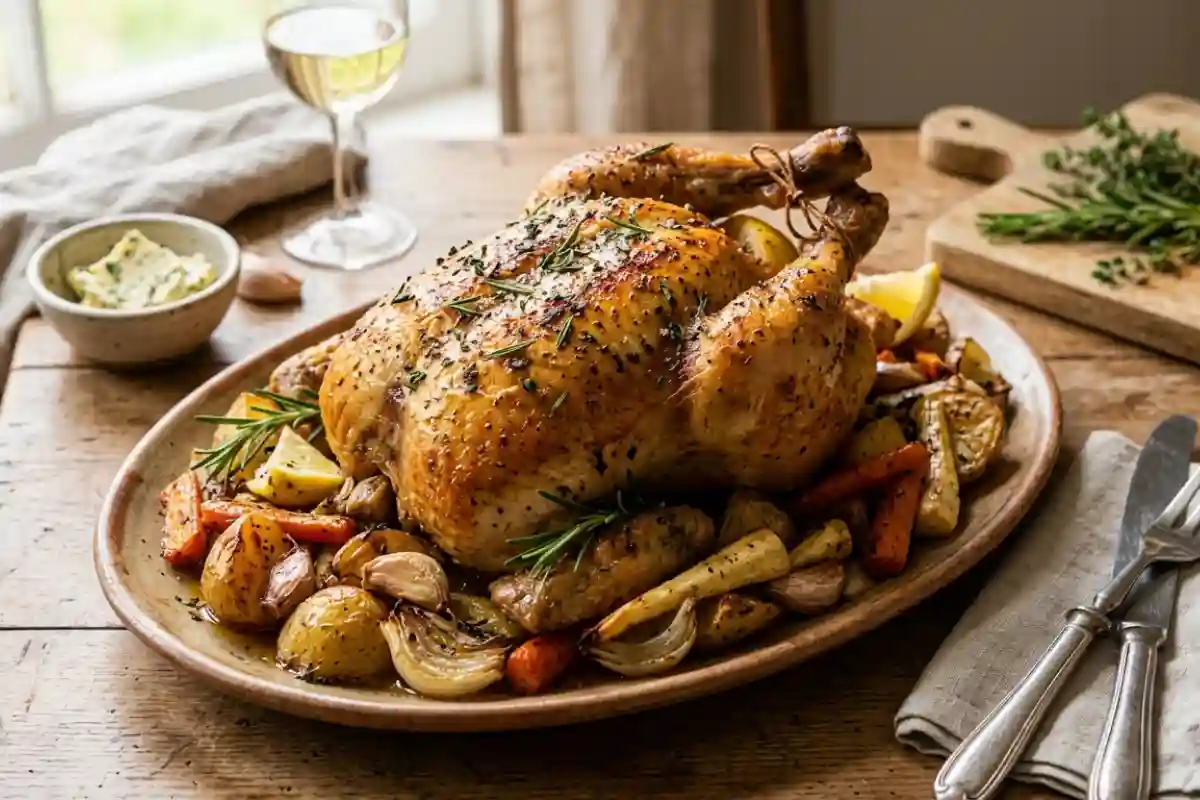
Whole Roast Chicken
Ingredients
Equipment
Method
- Remove the chicken from the refrigerator and set it on the counter for 30 minutes before cooking. This allows the internal temperature to rise closer to ambient, which promotes even cooking throughout the breast and thigh.
- Set the oven to 220°C (425℉) and allow it to fully preheat for at least 15 minutes. A properly heated oven is essential for the initial high-heat blast that crisps the skin.
- Use paper towels to thoroughly pat the outside of the chicken dry, including under the wings and around the cavity opening. Surface moisture is the primary enemy of crispy skin, so press firmly and repeat until no visible moisture remains.
- Combine the salt, black pepper, garlic powder, paprika, and dried thyme in a small bowl and stir until evenly blended. The mixture should smell sharp and fragrant before it ever touches the bird.
- Drizzle the olive oil over the outside of the chicken and rub it across the entire surface, covering the back, breast, and legs. Sprinkle the seasoning blend evenly over every surface, pressing it gently into the skin so it adheres.
- Place the lemon halves, halved garlic head, and fresh thyme sprigs inside the cavity. These aromatics steam from the inside during roasting, perfuming the meat and adding subtle depth without overpowering the natural chicken flavor.
- Tie the legs together at the ankles with kitchen twine so the bird holds a compact shape during roasting. Trussing keeps the thigh meat from overcooking before the breast reaches temperature and helps the bird roast more evenly.
- Set the chicken breast-side up in a roasting pan or oven-safe cast iron skillet. If using a roasting rack, place the bird on the rack so air circulates beneath it.
- Place the pan on the center rack of the preheated 220°C (425℉) oven and roast for 20 minutes. The skin will begin browning and the fat under the skin will start rendering, creating a sizzling sound and a roasted, slightly caramelized aroma.
- Lower the oven temperature to 180°C (350℉) and continue roasting for 50 minutes. At this stage the skin should be a deep amber-gold, and the juices pooling in the pan will smell intensely savory.
- Insert an instant-read thermometer into the thickest part of the thigh, avoiding the bone. The reading must reach 74°C (165°F) before the chicken is safe to carve. If it has not reached that temperature, return it to the 180°C (350°F) oven for an additional 10 minutes and check again.
- Transfer the chicken to a cutting board and tent it loosely with foil. Rest for 15 minutes without cutting into it. This resting period allows the muscle fibers to reabsorb the juices, which would otherwise run out onto the board.
- Remove the twine and carve the chicken by removing the legs first, then separating the thighs from the drumsticks, and finally slicing the breast meat away from the carcass. Serve immediately while the meat is still warm and the skin remains crisp.
Notes
- Storage: refrigerate leftover chicken in an airtight container for up to 4 days. Keep the carcass for making chicken stock.
- Make-ahead: season the chicken up to 24 hours in advance and refrigerate uncovered. The dry brine effect will deepen the seasoning and further dry the skin for better crisping.
- Roasting pan drippings: after removing the chicken, place the roasting pan over medium heat on the stovetop, add 120ml of chicken stock, and scrape up the fond for a quick pan sauce.
- Size adjustment: a 1.4kg bird will reach temperature in approximately 55 minutes at 180°C (350°F) after the initial 20-minute high-heat stage. A 2.2kg bird may need up to 65 minutes.
- Substitution: dried rosemary or herbes de Provence can replace the dried thyme in an equal 1 tsp quantity.
FAQ
What is Whole Roast Chicken?
Whole roast chicken is a preparation in which a full, bone-in chicken is seasoned and cooked uncovered in a dry oven until the exterior skin crisps and the interior meat becomes tender and fully cooked. It is one of the most foundational techniques in Western cooking, appearing in French rotisserie tradition, British Sunday roast culture, and American home cooking alike. The bird is typically placed breast-side up in a roasting pan, sometimes elevated on a rack, so that fat renders downward and the skin browns evenly on all exposed surfaces. A standard 1.8kg chicken yields four generous servings and produces a flavorful carcass suitable for making stock.
How do you roast a whole chicken?
Roasting a whole chicken begins with patting the bird completely dry, since surface moisture prevents the skin from crisping properly. The chicken is then coated in fat, seasoned generously, stuffed with aromatics, and placed in a preheated oven. The most effective method uses a two-stage heat approach: starting at 220°C (425°F) for 20 minutes to initiate browning, then reducing to 180°C (350°F) for the remainder of the cook so the interior reaches a safe temperature without the skin burning. Resting the finished bird for 15 minutes before carving is not optional; it is the step that separates moist, juicy meat from dry, stringy slices.
What temperature should whole roast chicken reach?
The safe internal temperature for whole roast chicken is 74°C (165°F), measured in the thickest part of the thigh with an instant-read thermometer. The probe must not touch the bone, because bone conducts heat and will give a falsely elevated reading. Some cooks target 77°C (170°F) in the thigh specifically, which allows a small margin above the food safety minimum while keeping the breast meat, which typically reads a few degrees higher, from drying out. The breast meat at 74°C (165°F) remains sliceable and moist when the bird is rested properly before carving.
How long does whole roast chicken keep and can you freeze it?
Cooked whole roast chicken keeps in an airtight container in the refrigerator for up to 4 days. For longer storage, carved meat freezes well in freezer-safe bags or containers for up to 3 months at minus 18°C (0°F). Bone-in pieces retain more moisture during freezing than sliced breast meat, so storing it on the bone where possible preserves texture. Thaw frozen chicken overnight in the refrigerator and reheat in a 160°C (320°F) oven for 15 minutes, covered with foil to prevent it from drying out. The carcass can be frozen separately and used to make chicken bone broth.
What can I substitute for olive oil in whole roast chicken?
Unsalted softened butter is the most common substitute for olive oil when roasting a whole chicken, and it produces a slightly richer, deeper color on the skin due to the milk solids browning during roasting. Avocado oil is a neutral alternative with a high smoke point of around 270°C (520°F), making it well-suited to the initial high-heat stage. Duck fat, if available, adds an intensely savory quality and renders beautifully across the skin surface. Coconut oil can be used but contributes a noticeable sweetness that may alter the overall flavor profile of the finished dish.
What do you serve with whole roast chicken?
Whole roast chicken pairs naturally with roasted root vegetables such as carrots, parsnips, and potatoes, which can be arranged around the bird in the same pan during the lower-heat stage of cooking. A simple green salad dressed with lemon and olive oil provides contrast to the richness of the chicken fat. Braised leafy greens such as kale or cavolo nero, wilted with garlic, complement the savory drippings well. For a more complete dinner spread, a poured pan sauce made from the roasting drippings and chicken stock ties the plate together and makes use of every bit of flavor left in the pan.